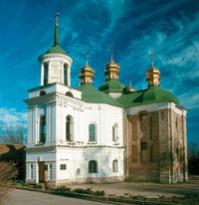
Photo project “In memory of Kyiv-Pechersk Lavra”
 We are glad to present the new release of “In memory of Kyiv-Pechersk Lavra” photo project to you.
Today we are going to unveil the next portion of information about the reproduction of the architectural ensemble of Kyiv-Pechersk Lavra in the postwar years.
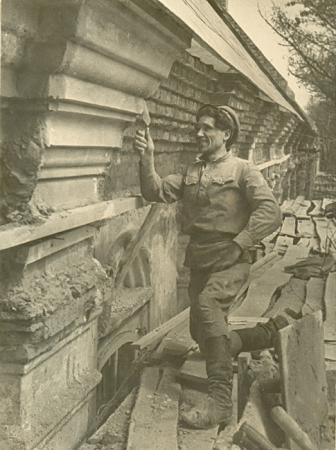
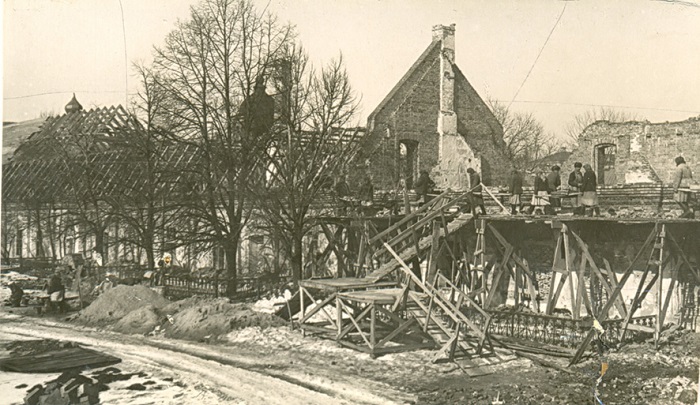
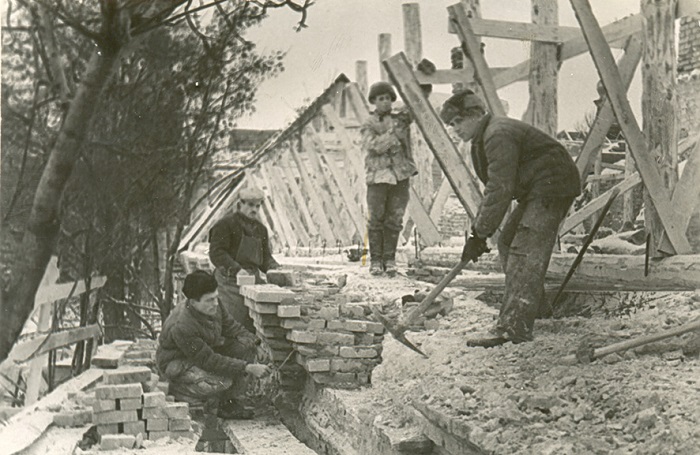
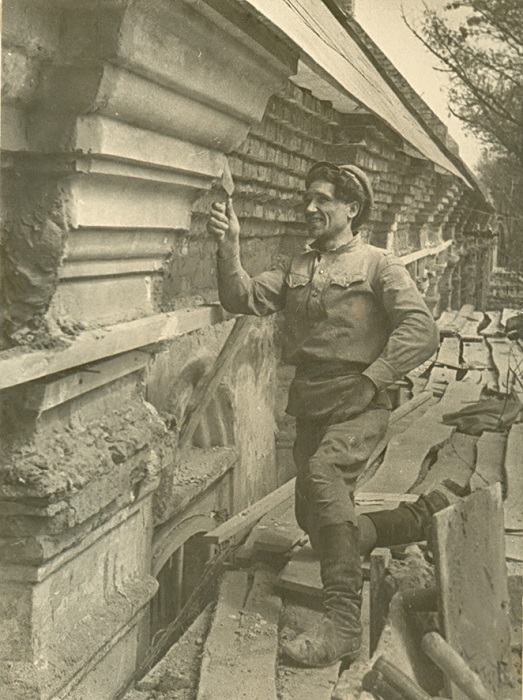
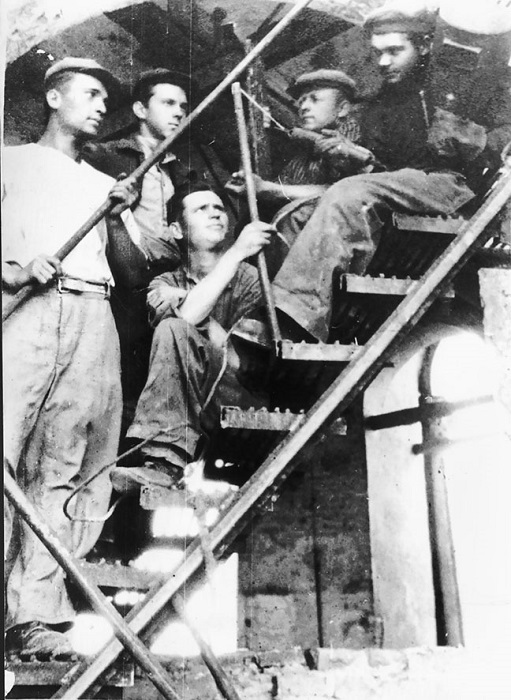
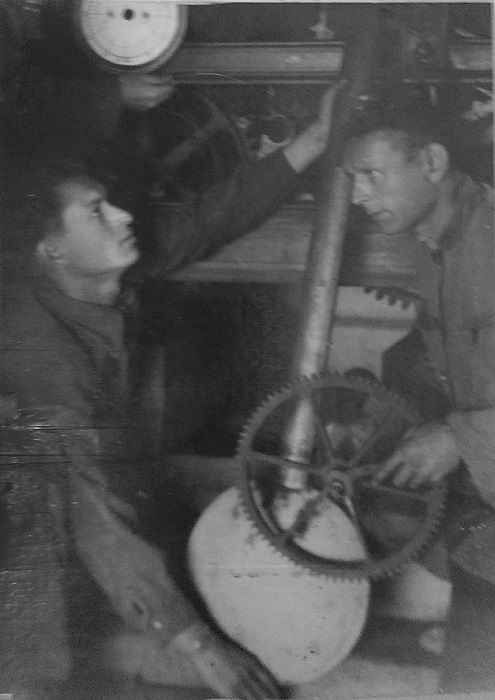
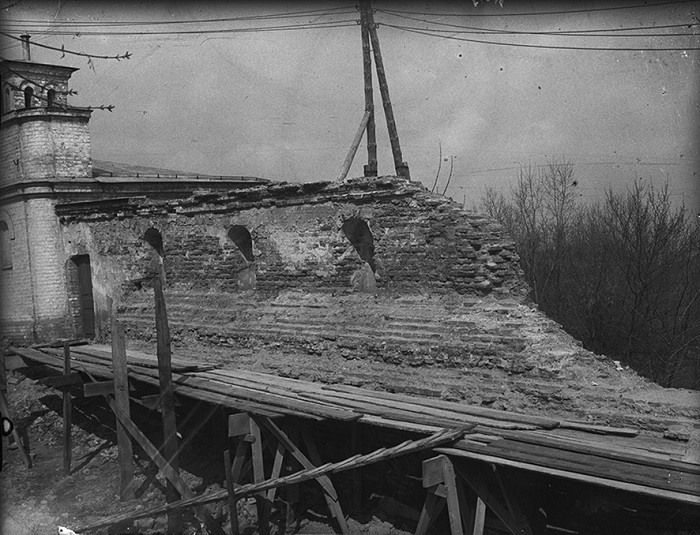
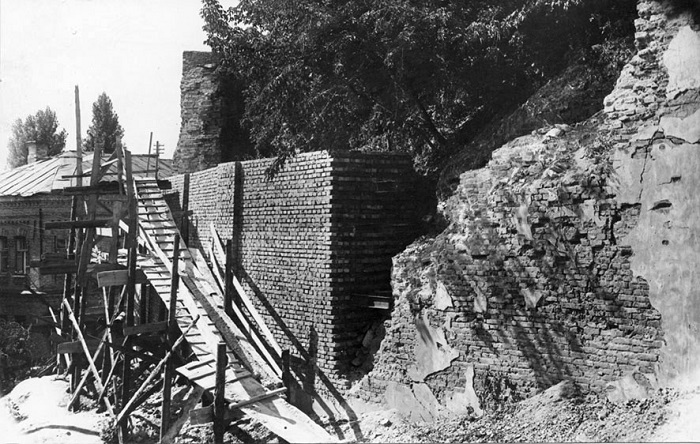
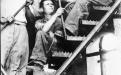
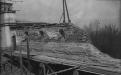
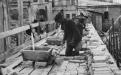
Despite all the difficulties of that time, the lack of construction materials and skilled workers, the staff of the Preserve continued to clear and reconstruct the monuments on its territory. Only during 1948, nine buildings were completely restored and three more partially restored. Among those reconstructed structures, there were two large buildings with cells for monks. Besides, the roof of the Refectory Church was also restored. In addition, the North Tower and part of the Fortress walls were repaired. In 1949 the new look was given to the dome of the Great Lavra Bell Tower. In order to speed up the restoration works, some of the buildings were leased to other organizations, which had to restore the premises they occupied by themselves. In 1947–1948, the lease takers restored six more buildings.
Destroyed communications, such as water supply and drainage system, constituted a great threat to the Lavra monuments. On July 10, 1945, a dangerous accident - breakthrough of water, occurred to the north of the ruins of the Dormition Cathedral. Three yers later, in 1948, the intensified landslides in the Lower Territory started seriously threatening the existence of cave labyrinths. This forced to pay more attention to the underground economic structures. As a result, about 300 meters of tunnels were restored in 1948-1950.
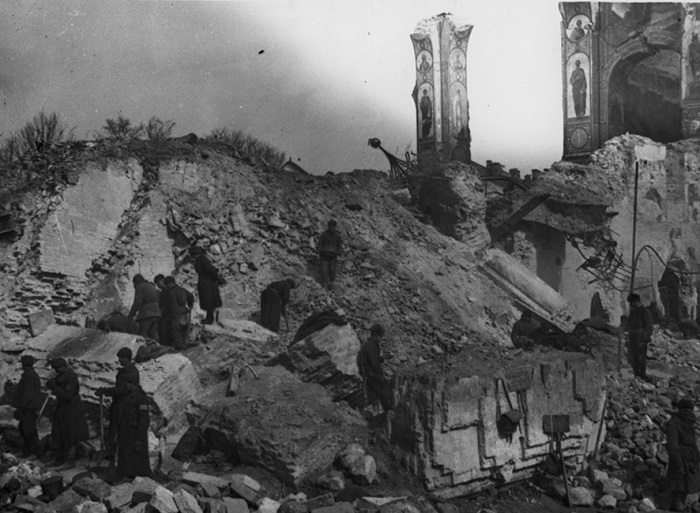
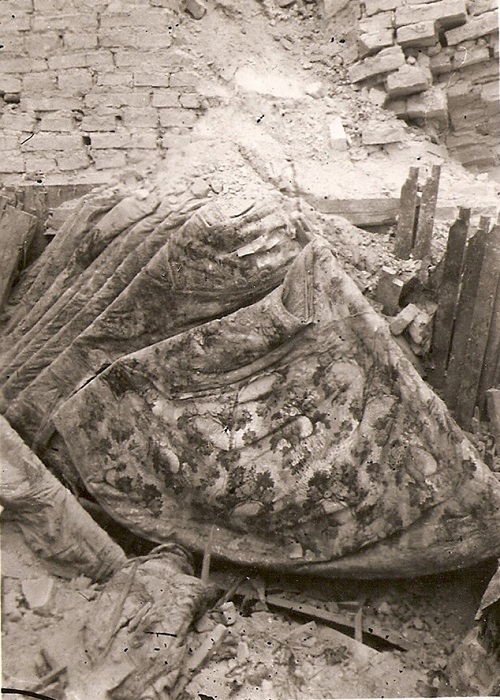
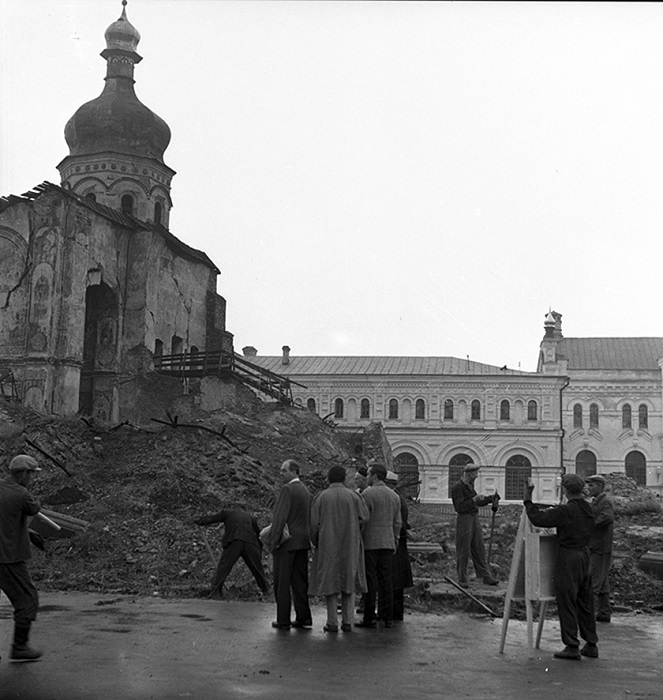
Meanwhile, the workers continued to clear the ruins of the Dormition Cathedral and the archeologists conducted their research in the remaining fragments of the temple. About five hundred valuable samples of fabric and sewing (16th-19th centuries), a collection of wooden crosses (17th-19th centuries), more than two thousand metal objects and their fragments (some of which were of silver origin) were found. The survival of the marble bas-relief from the tombstone of Field Marshal General Petro Rumiantsev-Zadunaisky (created by the famous sculptor Ivan Martos) was a real miracle. Today it can be seen as part of the restored monument in the interior of the Dormition Cathedral. Amoung other valuables found in the ruins of the Cathedral one would mention the details of the tombstone of the national hero of Greece Kostiantyn Ypsilanti. The sculpture was made by the equally famous sculptor Stepan Pimenov, Sr. This monument was also restored and now it adorns a cozy courtyard south of the Gate Church of the Trinity. One more monument, which is considered to be a real Christian shrine, was raised from under the ruins and restored. It is the tomb with the pointer finger of the first martyr Archdeacon Stephen, which is now preserved in the Dormition Cathedral.
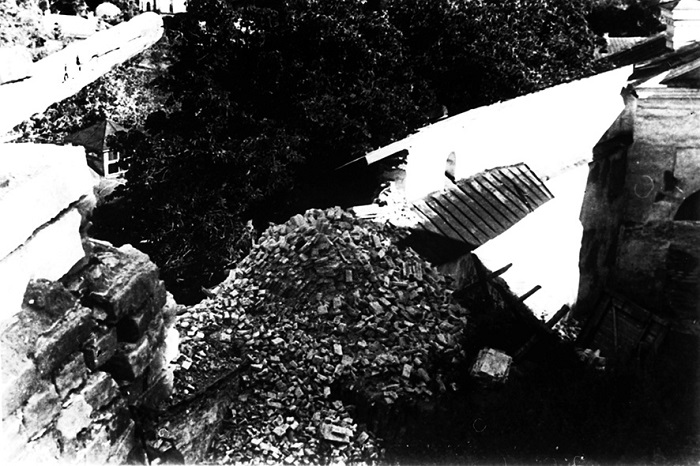
But, despite all the efforts, the remains of the Dormition Cathedral were completely cleared up only in the early 1960s. That same year, the works aimed at clearing the territory from all other types of destruction caused by the war, also ended.
Next week we will continue talking about the restoration of the architectural ensemble of Kyiv-Pechersk Lavra and the activities of the staff of the Preserve aimed at bringing the objects of the collection of the museum institution back to life.
Captions to the illustrations:
1. Restoration of the Cells of the Council Elders (№ 4)
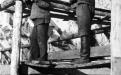
2-3. Reconstruction of the roof of the building with monastic cells (№ 3)
4. Restoration of the eaves of the buildings with cell blocks.
5-6. Repair of the chimes of the Great Lavra Bell Tower
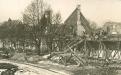
7. Destroyed Fortress walls and ruined retaining wall of the Observation platform
8-9. Restoration of Fortress walls (along the descent to the Caves)
10. Retaining wall of the Observation platform during the restoration
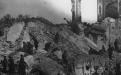
11. Clearing the ruins of the Dormition Cathedral. 1940s
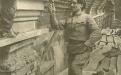
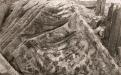
12. Church vestments found during the clearing of the ruins of the Dormition Cathedral.
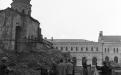
13. Clearing the ruins of the Dormition Cathedral. 1950s





/socialmedia/icons/levelten/glossy/32x32/youtube.png)
/socialmedia/icons/levelten/glossy/32x32/facebook.png)
/socialmedia/icons/levelten/glossy/32x32/twitter.png)