National Kyiv-Pechersk Historical and Cultural Preserve has joined the challenge #MuseumFromHome.
 Dear Friends!
While the monuments of the Preserve are temporarily closed for visiting, we invite you to spend these days in informative and educational way. Take a trip to our virtual museum during your coffee or tea break and make your #quarantinediscoveries! Keep exploring outstanding monuments of the World Cultural Heritage!
Cells of the Cathedral
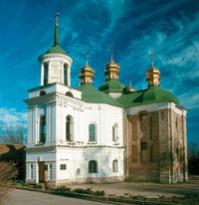
Elders represent the unique example of monastic houses of the 16th-18th centuries. The elders (such as, the clergymen, provisors, preacher, etc. - members of the Clerical Synaxis of the Kyiv-Pechersk Lavra – an advisory body that solved the questions of the inner life of the monastery) lived in these cells for ages. The first graphic representation of the monastic cells in this place was made by Martin Gruneveg, the merchant from Lviv, in 1584. In 1720–1721, a bricky Baroque style building was built here. The remnants of the bricky cells of the 16th–17th centuries, which survived after the fire of 1718, were incorporated into the construction of the building. The length of the building is 140 m, its width is 6 m. It consisted of 11 separate cells, the layout of which is based on “hut and porch” as well as “hut for two halves” traditional Ukrainian style of housing. Together with the annexes and cells that were placed in the rear of the building and used as utility rooms and housing for novices, the building forms a courtyard, previously known for its so-called “behind the Cathedral backyards”, such as, small gardens, barns, cellars, etc. For a long time the sittings of the Lavra Clerical Synaxis were held in this building. Until the beginning of the 19th century it was used as the residence for the Lavra superior. Besides, the bishops of Greece, Serbia, Dalmatia also lived there. After the nationalization of the Kyiv-Pechersk Lavra the building continued to be used for residential purposes. Thus, in the late 1920’s the Department of Numismatics of the Museum of Culture and Ethnography started its work there. It was planned that eventually All-Ukrainian Museum of Numismatics will be opened on the basis of this unit. In 1942–1943 the building experienced significant destruction, but in 1953–1963 it was restored. In the postwar period there was a post office there and later the People's court. Since mid-1950’s it has started functioning as the platform for the expositions of the Preserve.
#янакарантині, #музейзафіліжанкоюкави #stayathome, #museumfromhome, #museumcoffeebreak, #museumteabreak
/socialmedia/icons/levelten/glossy/32x32/youtube.png)
/socialmedia/icons/levelten/glossy/32x32/facebook.png)
/socialmedia/icons/levelten/glossy/32x32/twitter.png)