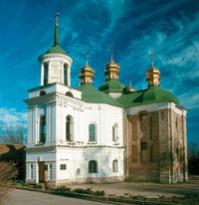
National Kyiv-Pechersk Historical and Cultural Preserve has joined the challenge #MuseumFromHome
 Dear Friends!
While the monuments of the Preserve are temporarily closed for visiting, we invite you to spend these days in informative and educational way.
Take a trip to our virtual museum during your coffee or tea break and make your #quarantinediscoveries!
Keep exploring outstanding monuments of the World Cultural Heritage!
The Cells of Monks
The Cells of Monks are the examples of the brick-built monastic housing typical for the 18th century. They were built in the Baroque style between 1720 and 1721 in the place, which was previously occupied by the wooden cells that disappeared during the Great Fire of 1718 (Martin Gruneveg, the merchant from Lviv, depicted them on a schematic plan in 1584).
The length of the building is 64 m, its width amounts to 6 m. The building is divided into five sections by the transverse walls. Each section consists of “seni” (a hallway), private rooms and service premises. Besides, the section has the exits from the main and the rear facades. The interiors of the cells (i.e. walls, ceilings, doors and furniture) were decorated with ornamental and storytelling painting. The main facades were beautified with the front gardens edged by the wooden (and from the beginning of the 20th century – metal) fences, while the rear facades had small porches that were opening the ways to the fruit gardens and vegetable plots.
For a long time the cells were the lodgings for the choristers of the Dormition Cathedral. That is why they are called “choristers’ cells” on some of the maps of the 18th–19th centuries that depict Kyiv-Pechersk Lavra. At the beginning of the 20th century some of these premises were used by the free-lance churchmen.
In the 1920s and 1930s, the building was used as the living space for the employees of the Preserve. During the Second World War it was significantly damaged. More than 54% of the total size of the building was lost. Its present form appeared in 1946–1950 when it was rebuilt. Today these premises are used for permanent museum exhibitions.
#stayathome, #museumcoffeebreak, #museumteabreak
/socialmedia/icons/levelten/glossy/32x32/youtube.png)
/socialmedia/icons/levelten/glossy/32x32/facebook.png)
/socialmedia/icons/levelten/glossy/32x32/twitter.png)