«Memories of Kyiv-Pechersk Lavra» photo project
 Dormition Cathedral destruction versions
Dear friends!
Last week we remembered a sad date – 80 years since November 3, 1941, the day when Dormition Cathedral, the main shrine of Kyiv-Pechersk Lavra, blew off. There are several versions of the circumstances that caused that event. Вut every time this topic arises, there appears the idea that explosive devices could be planted somewhere in the underground area of the Cathedral, for example, the system of heating channels.
It was laid out only in the late 19th c. This fact caused great inconvenience and damage to the Great Church utensils and decorative elements of its interior premises. In the mid-1880s, the Ecclesiastical Сouncil of Kyiv-Pechersk monastery announced competition for the installation of heating and ventilation systems in the Cathedral. The project was won by the military engineer Capt. Ivan Lilier. The administration of the Monastery signed the corresponding contract with the engineer on September 3, 1885. Ivan Lilier became not only the author but also the supervisor of the project. He monitored the system construction process, which, by the way, ended rather quickly. Already on April 28, 1886 Lavra’s administration expressed gratitude to the engineer for the installation of the excellent water heating and ventilation systems in the Great Pechersk Church. Thus, despite the severe winter frosts that covered the region in 1885 and 1886, the temperature could easily reach 13 degrees Celcius and go higher. The air in the premises was neither dry nor moist so that condensed water did not appear on the walls.
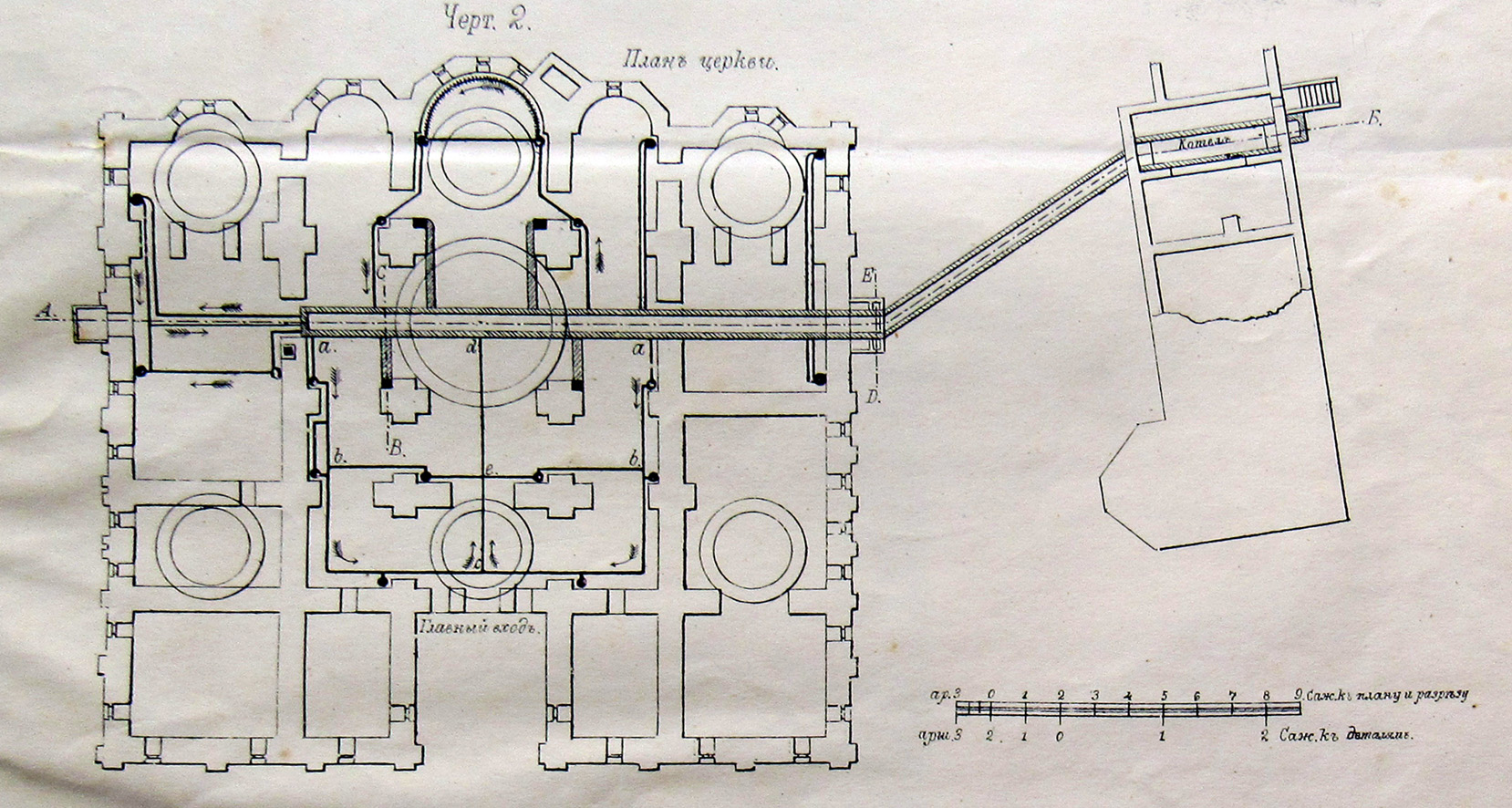
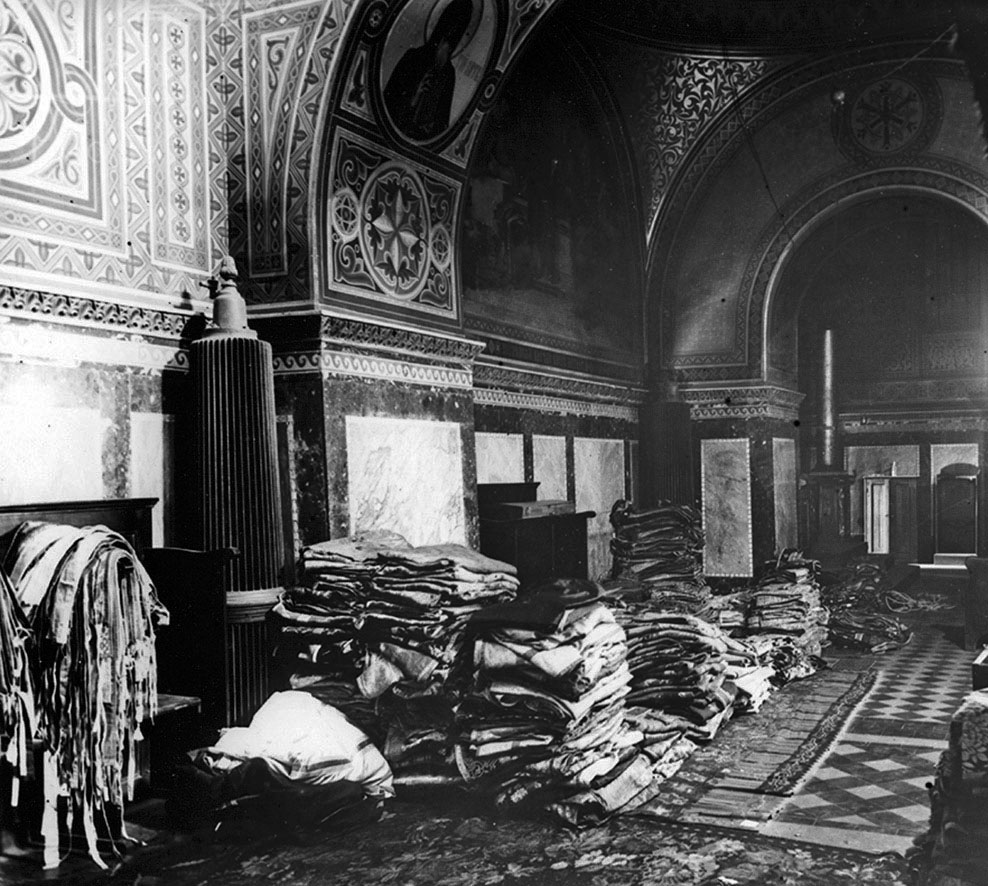
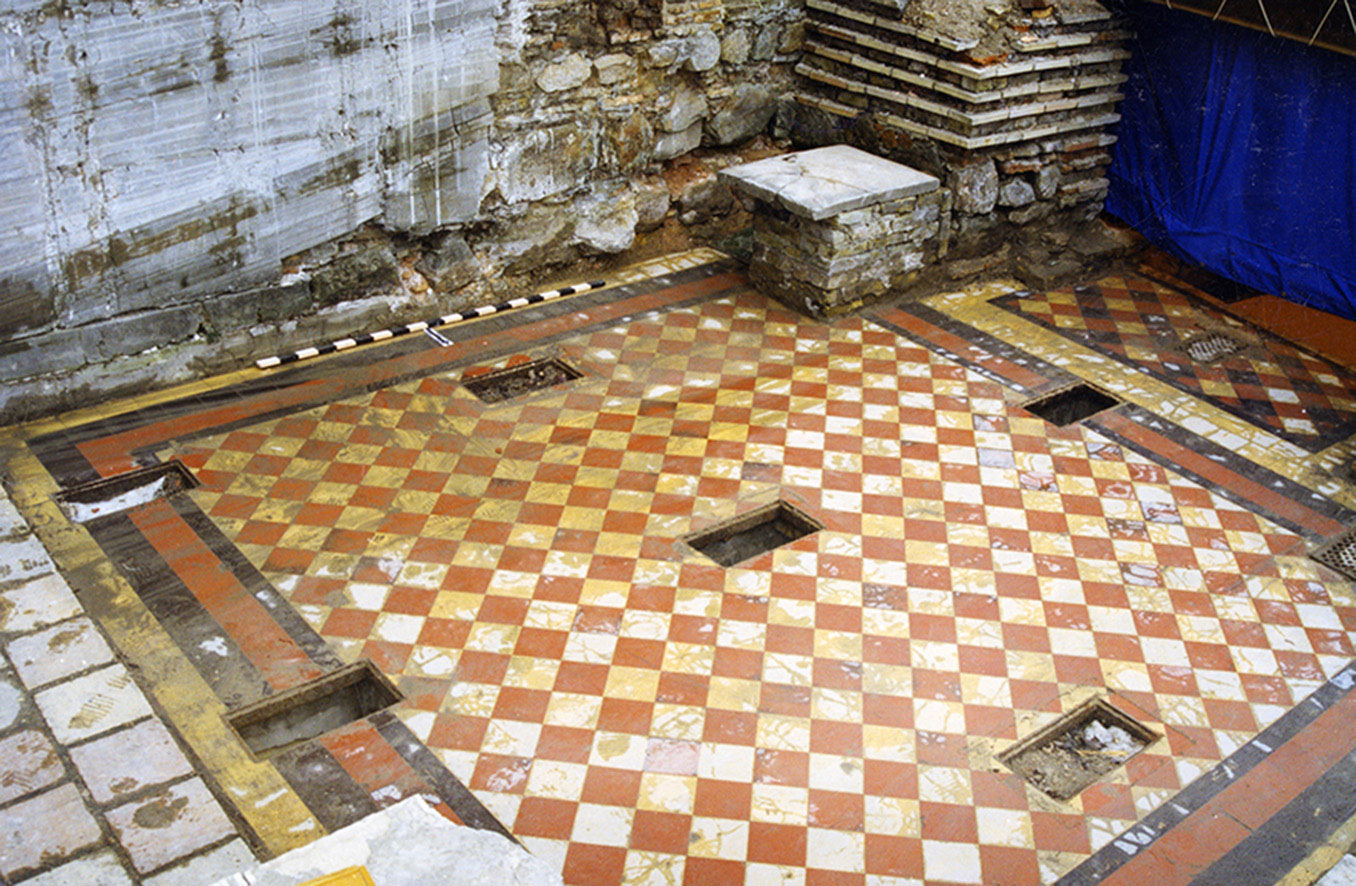
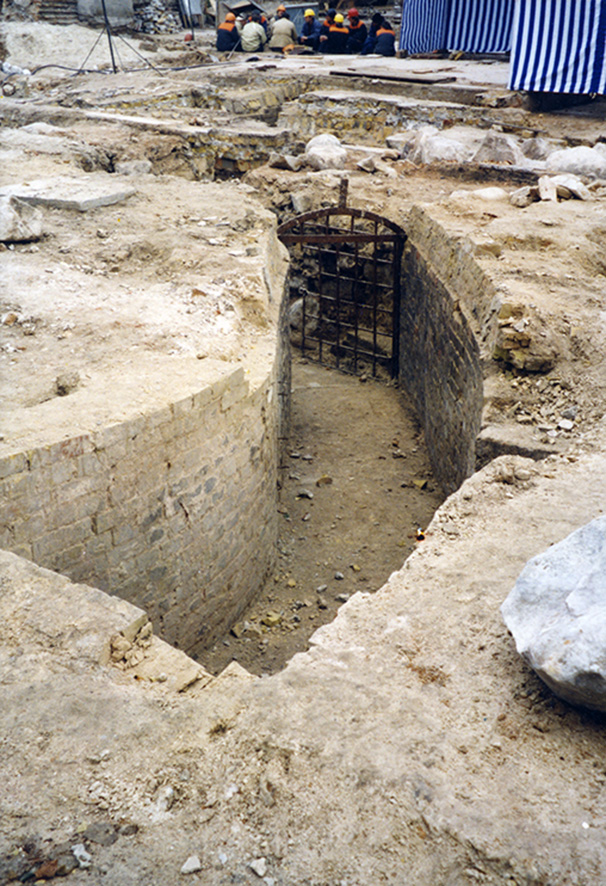
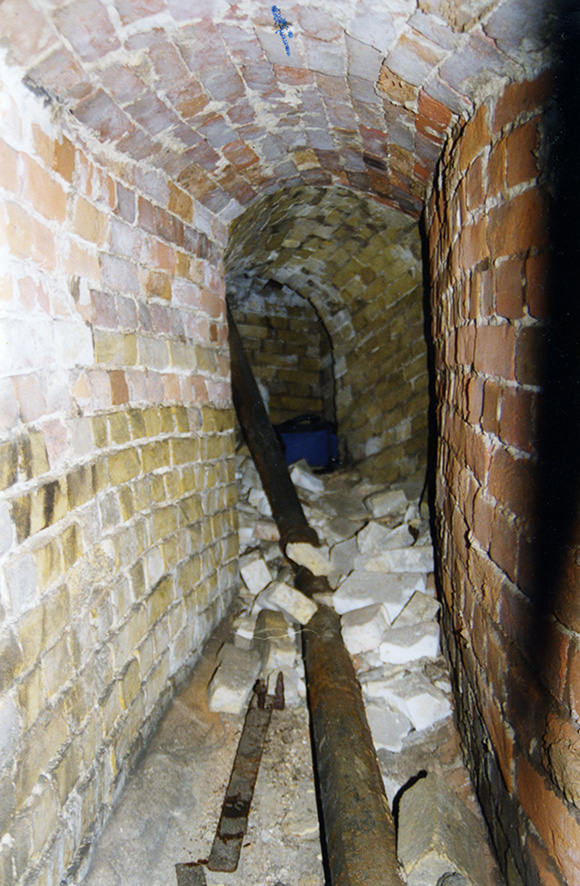
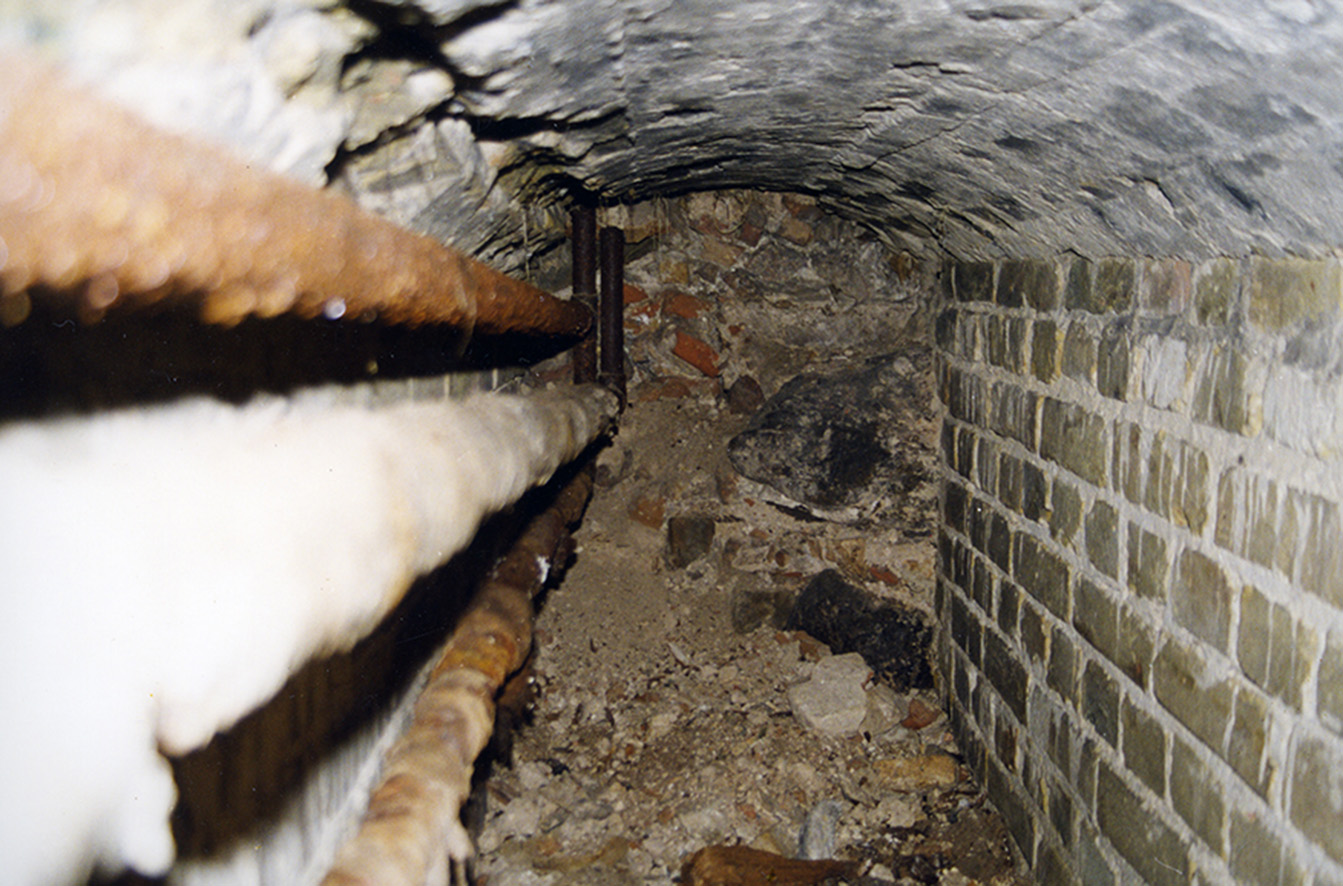
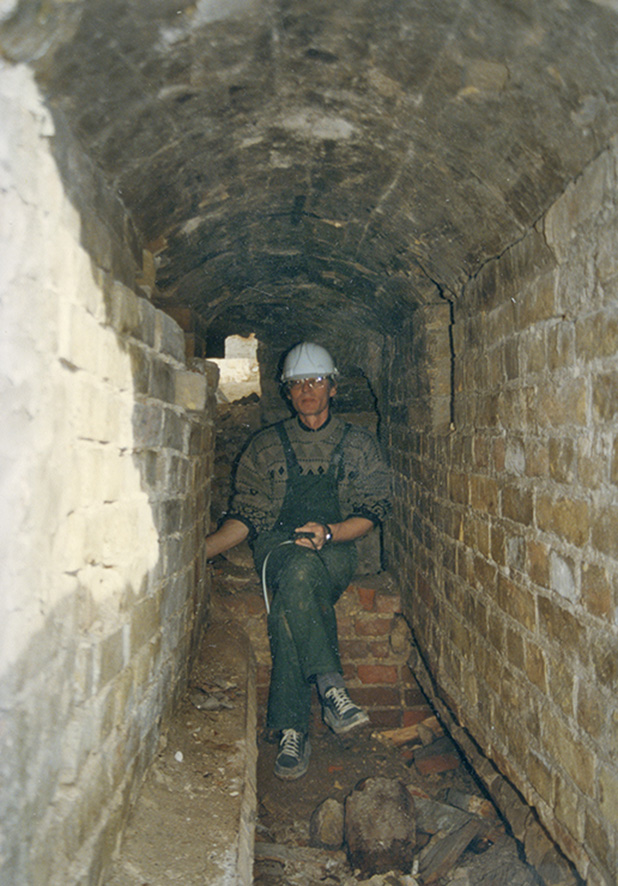
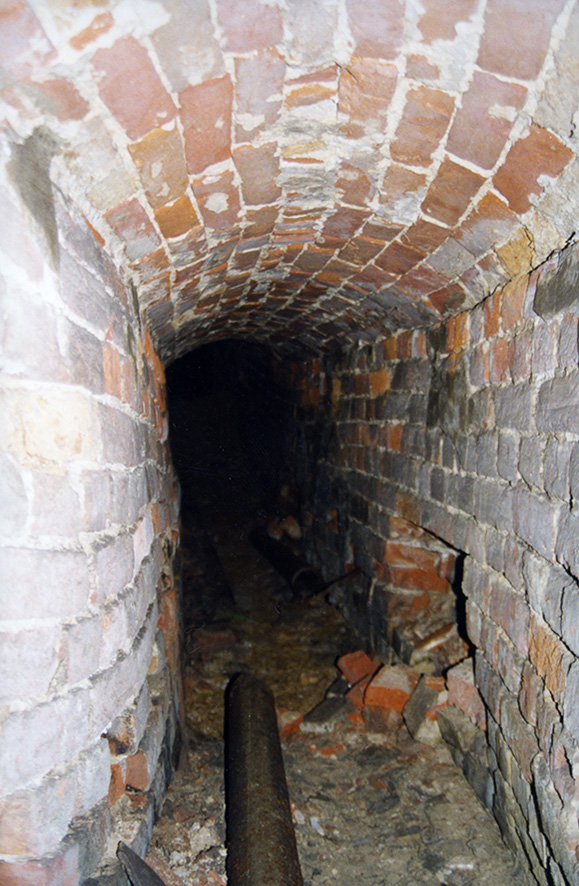
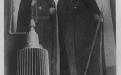
A low-pressure water heating boiler that was 24 feet (7.3 m) in length and 4.5 feet (1.4 m) in diameter, contained 64 cubic meters of water. It was located in the basement of a separate building at a distance of 11 yards (about 23 m) from the Church. Those two points were connected by the underground brick gallery, which was 2.5 arshins (178 cm) high and 1.25 arshins (89 cm) wide. In the Cathedral the gallery branched into several winding air ducts of smaller cross-section. In the middle of each of those smaller galleries there were pipes with hot water. “Special vertical furnaces” or batteries with vertical ribs (that were 1 foot/0.3 m in diameter and 7.5 feet/2.3 m in their height) were installed in the temple. In addition, there also appeared small mines in the building. Through them the warm air, which was coming out of the air duct, c ould get into the Great Church premises. Six months later, Ivan Lilier received a reward of 500 rubles for his work. The system and equipment were tested and showed good performance.
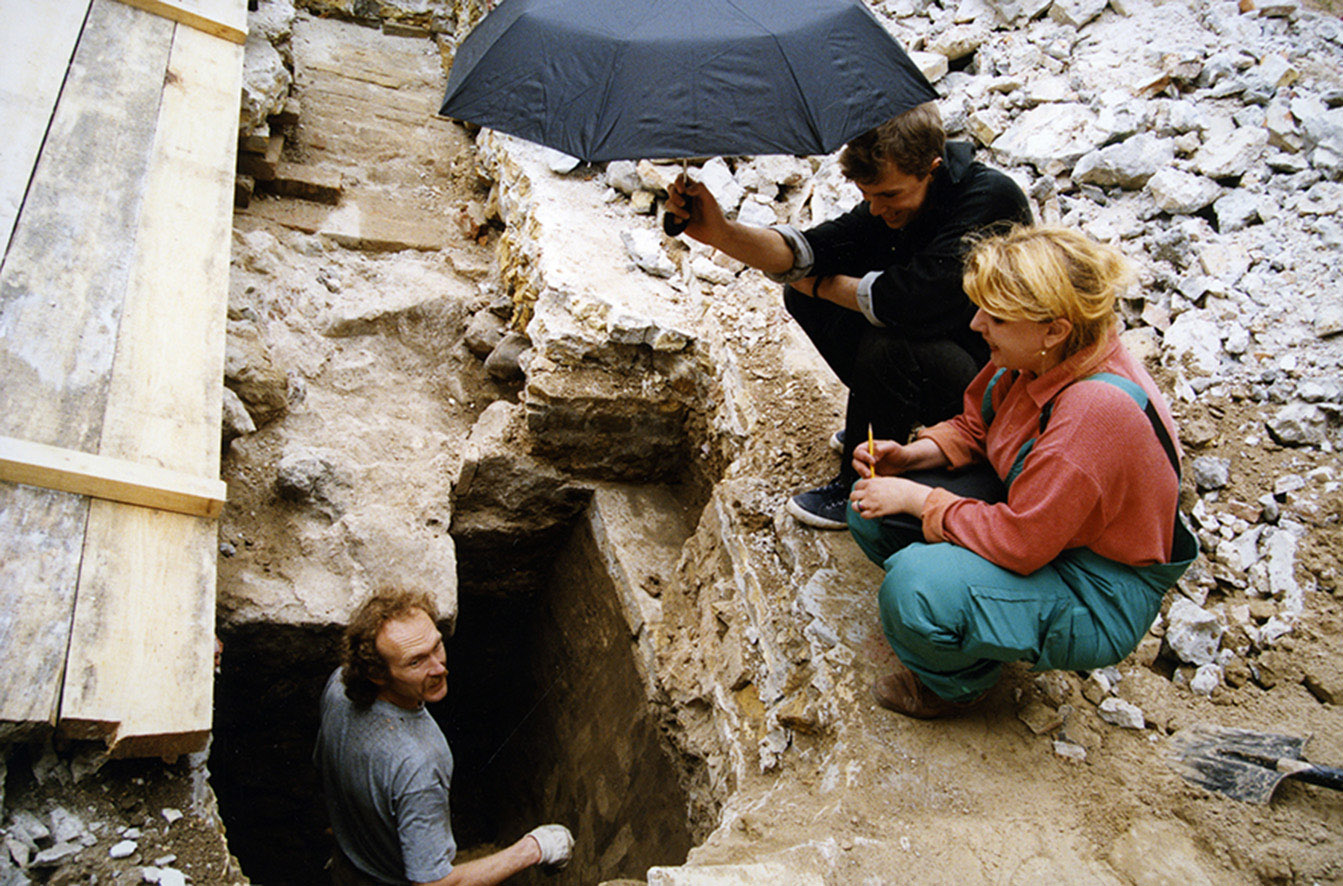
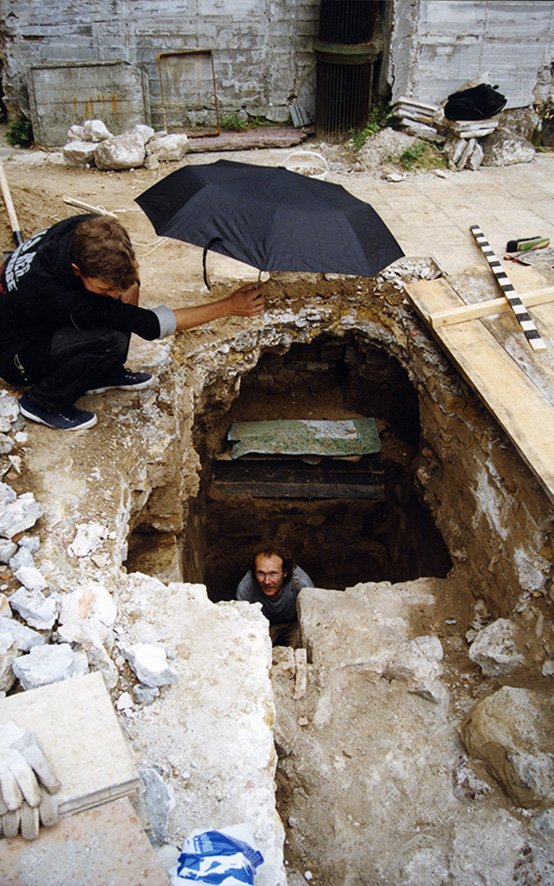
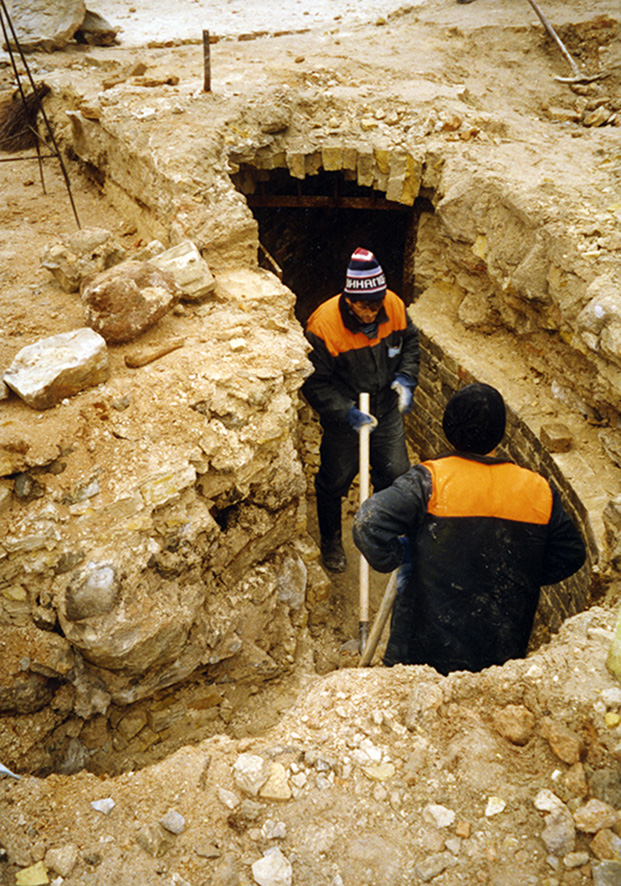
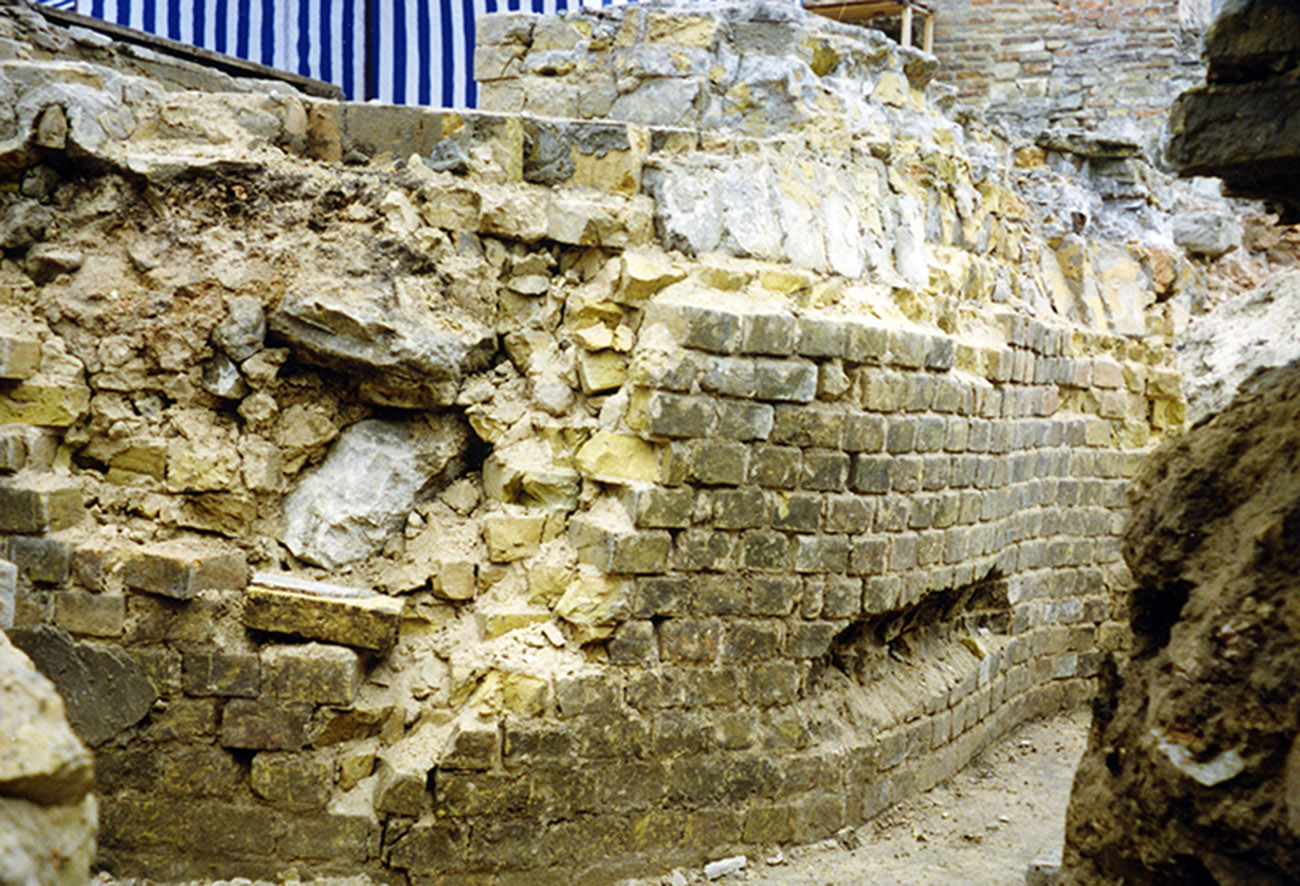
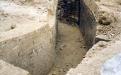
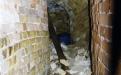
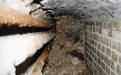
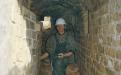
During the architectural and archaeological research of 1997–2000, one of the priority tasks was to inspect the system of heating channels constructed in the late 19th century and determine the state of their safety. In total, about 100 m of underground galleries in the central part of the Cathedral were cleared and inspected. They stayed almost unresearched archaeologically until then. That is why, our today’s selection of photos tells about that particular stage of the inspection.
Next week “Memories of Kyiv-Pechersk Lavra” photo project will continue the story about the archaeological research that preceded the reconstruction of the Dormition Cathedral in the late 20th century.
Captions to the illustrations:
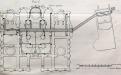
1. Drawings from the article by Ivan Lilier (“Engineer” magazine, 1886) that show the arrangement of heating and ventilation systems in the Great Pechersk Church [KPL-A-588]
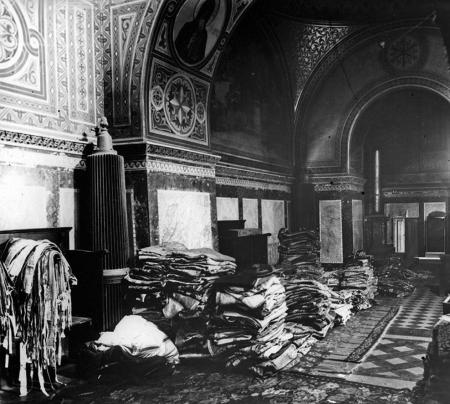
2. “Special vertical furnace” or radiator in the interior of the Church, the end of the 19th c. [KPL-N-6025]
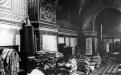
3. “Special vertical furnace” or radiator in the interior of the Church,
1920s-1930s [From the Fund collection of the National Preserve “Kyiv-Pechersk Lavra”]
4. A section of the floor in the narthex with air duct openings through which warm air was coming to the Church premises
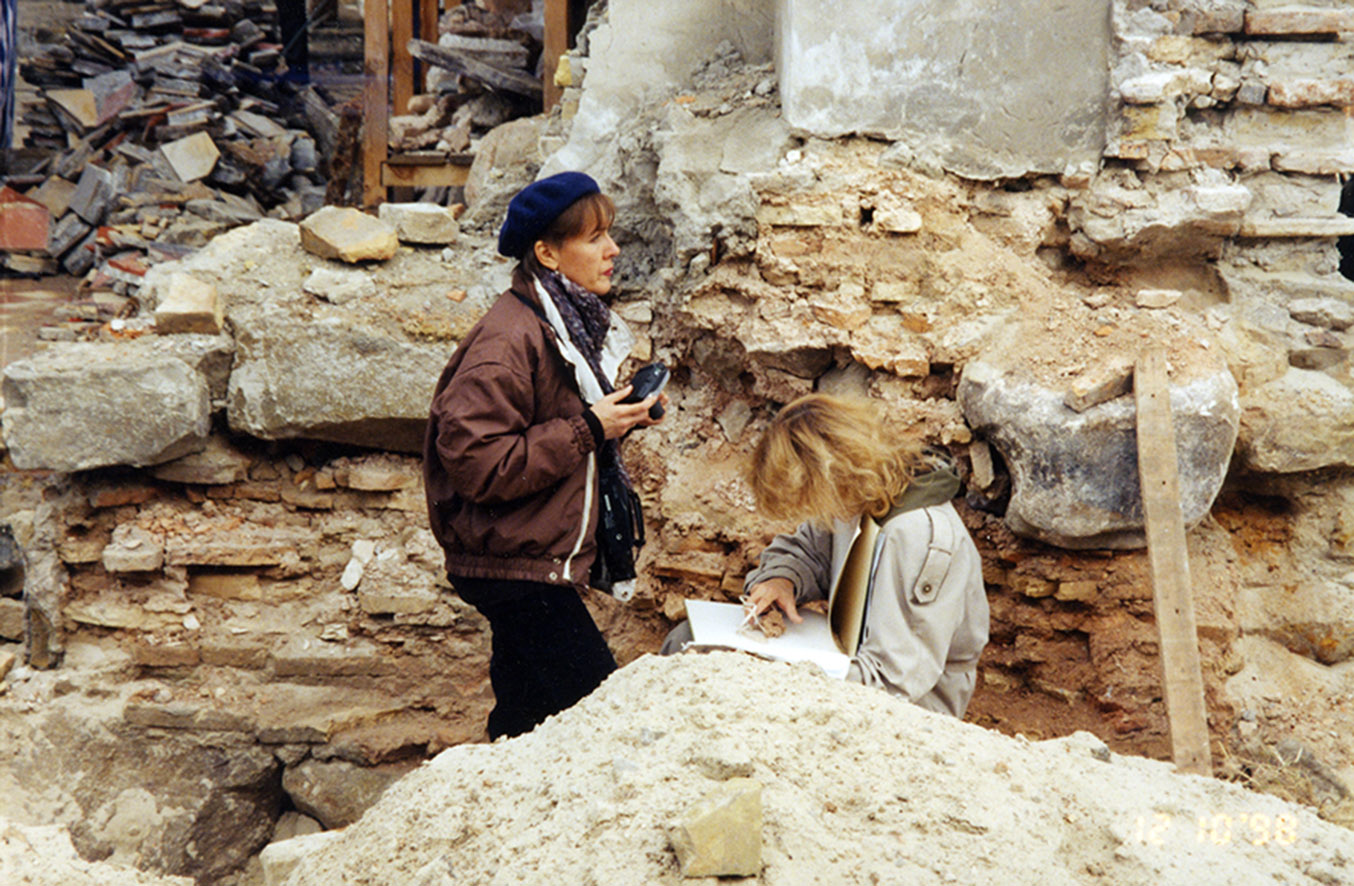
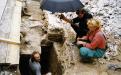
5-6. Heating channels start to be cleared. Photo № 6 shows Andriy Zankin in the excavation and Oksana Chobitko - near the excavation on the right.
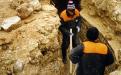
7. The process of system clearing
8-9. Upper level of heating channels after clearing
10-11. Lower level of heating channels. Pipes through which the Cathedral received hot water
12. A short break. In the photo - Serhii Balakin
13. Cleared and uncleared areas of the gallery
14. Measurement and photofixation of the cleared items






/socialmedia/icons/levelten/glossy/32x32/youtube.png)
/socialmedia/icons/levelten/glossy/32x32/facebook.png)
/socialmedia/icons/levelten/glossy/32x32/twitter.png)