Measure Icon of the 18th century of the Branicki Family Dear Friends!
 We continue to acquaint you with the Artistic Heritage of the Kyiv-Pechersk Lavra.
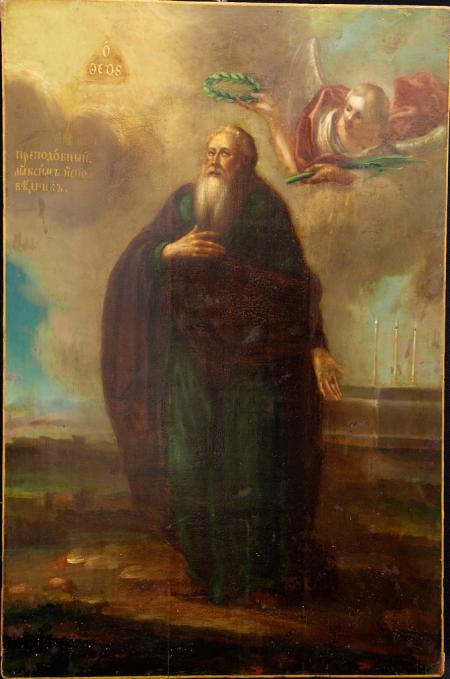
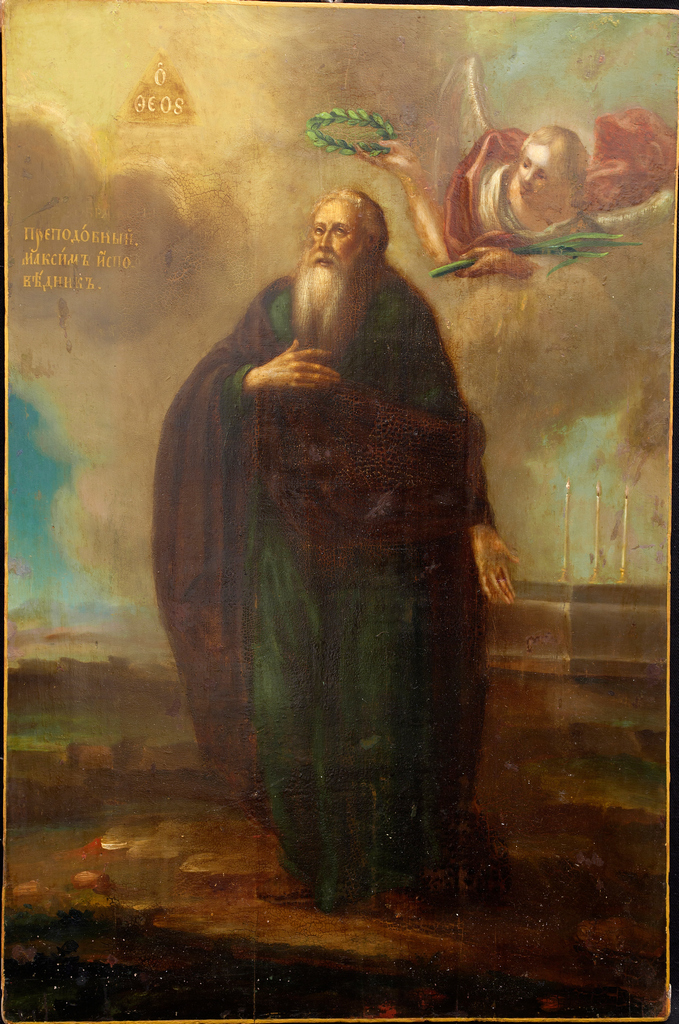
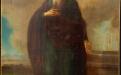
We are pleased to present a unique measure icon, or “birth” icon, of Saint Maximus the Confessor, painted in 1785 (wood, oil; 55.8×37 cm; KPL-Zh-1465). Among the works of patronal iconography stored in the collection of the National Preserve “Kyiv-Pechersk Lavra”, this icon is of exceptional value.
Interesting and extremely important information can be found on the back of the icon. It is an image of the laurel wreath, the branches of which are tied with a pink ribbon. The following inscription is painted in the center of the wreath: “THE LENGTH OF THIS ICON IS EQUAL TO THE BODY HEIGHT AND THE WIDTH IS EQUAL TO THE HEAD CIRCUMFERENCE OF THE BABY ALEXANDER MAXIM, COUNT BRANICKI; BORN ON JANUARY 21, 1785. IN BELAYA TSERKOV…”According to the inscription, it is a “birth” icon from the Counts Branicki family.
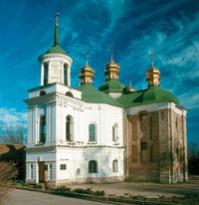
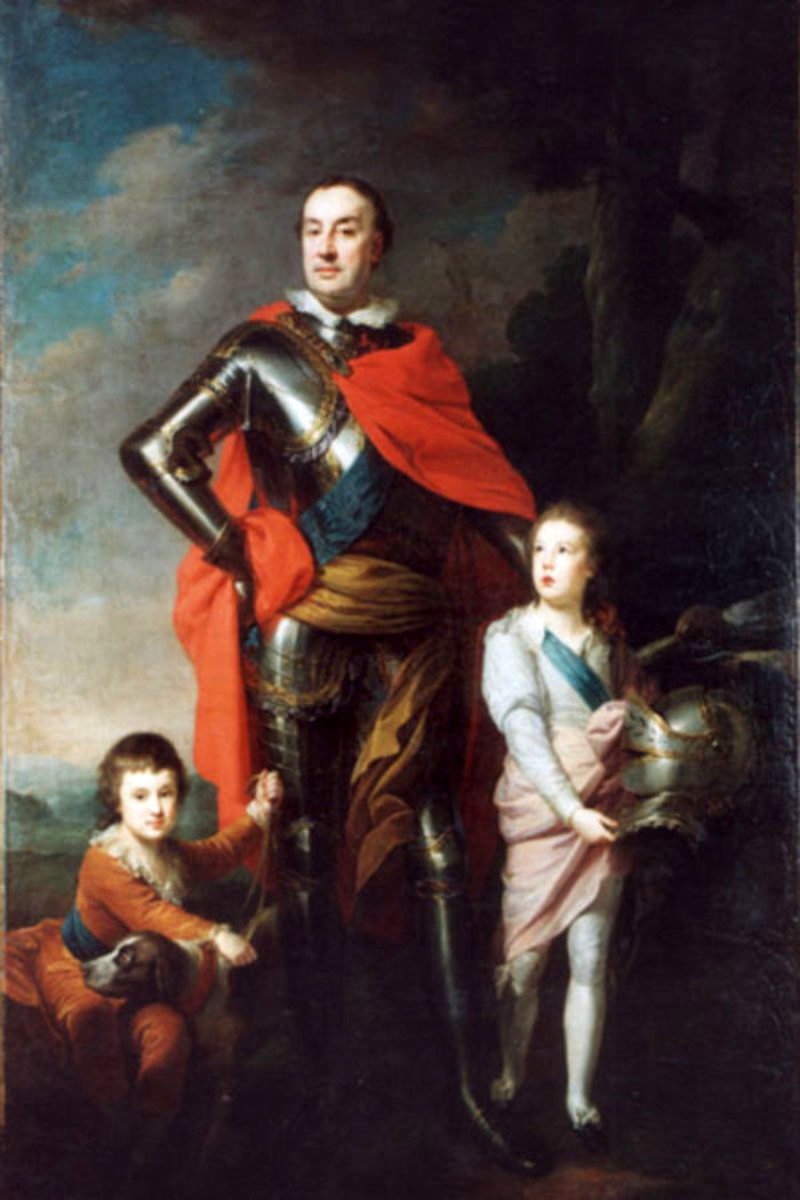
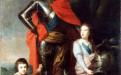
The history of this rare object is connected with the birth of Olexandr Branicki - the son of Count Franciszek Ksawery (Francis Xavier) Branicki, the Great Crown Hetman, and his wife Olexandra, née Engelgard. Counts Branicki belonged to the wealthiest and most influential representatives of the European aristocracy, being part of the immediate entourage of Empress Catherine II. They had a palace in St. Petersburg, owned huge estates in the south of the Kyiv region. In addition to numerous villages, they owned the towns of Bila Tserkva, Medvin, Rokytne, Stavyshche, and Boguslav. The permanent residence of the Branicki family was Bila Tserkva, where they lived at the end of the 18th century. They founded there a luxurious park - the famous arboretum «Olexandria», open to public today.
The Counts of Branicki had five children: two sons and three daughters. Olexandr, the second son, was born on January 21, 1785, in Bila Tserkva according to the inscription on the back of the icon. According to the Orthodox Calendar, St. Maximus the Confessor is honored on this day. He became the heavenly patron of the count's child and is depicted on the measure icon.
However, another date of birth is recorded in the metric book of the cathedral in Bila Tserkva, which is February 1, 1785. Such discrepancy in the date of birth is explained by the difference between the Julian and Gregorian calendars, which in the 18th century was eleven days.
The baptism ceremony of Count Oleksandr Branicki took place in two stages: he was baptized “from the water” on February 2 in the cathedral in Bila Tserkva, and the rite was supplemented in May 15 in the same church. At the ceremony, the trustee of Empress Catherine II was Field Marshal Count Ivan Gudovych.
Olexandr Branicki lived for 22 years. According to his relatives, he wanted to run away from home to General Jan Dombrowsky's legions as a young man and did not do so, as he died tragically after falling from a horse at the Branicki estate in Stavyshche.
Few ancient measure icons have been preserved to our time, because the tradition of their creation was typical of mainly aristocratic circles. The unique St. Maximus the Confessor icon of 1785 from the Preserve collection is almost the only example of a measure icon in the museum collections of Ukraine.
Captions to the illustrations:
Fig. 1. St. Maximus the Confessor measure icon, 1785
Fig. 2. Inscription on the back of St. Maximus the Confessor icon, 1785
Fig. 3. Johann Baptist Lampi Sr. (1751–1830). Portrait of Count Francis Xavier Branicki with his sons, 1790
The text was prepared by Iryna Schultz,
Deputy Head Division for the Study of Artistic Heritage
#ArtisticHeritage
#МистецькаСпадщина


/socialmedia/icons/levelten/glossy/32x32/youtube.png)
/socialmedia/icons/levelten/glossy/32x32/facebook.png)
/socialmedia/icons/levelten/glossy/32x32/twitter.png)