National Kyiv-Pechersk Historical and Cultural Preserve has joined the challenge #MuseumFromHome
 Dear Friends!
Take a trip to our virtual museum during your coffee or tea break and make your #quarantinediscoveries! Admire unique cultural assets of the Museum Fund of Ukraine!
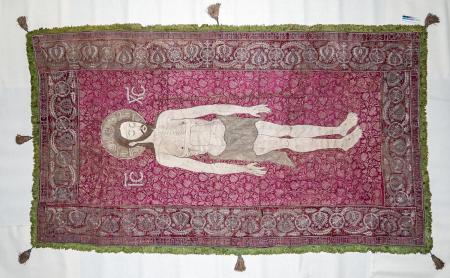
A Shroud (translation of Greek Epitáphios (Ἐπιτάφιος), meaning “on/over the tomb”) is a large rectangular cloth, decorated - embroidered or sometimes painted, or both - with the dead body of Jesus Christ after the Crucifixion. This is a special type of liturgical fabric used in the services of the Holy Week (week before Easter). The Shroud of the Preserve Collection is a unique monument of Ukrainian church embroidery of the 17th century (230,0 × 130,0 cm in size). It is made of precious Iranian brocade inwrought with gold threads on a red satin. The figure of Christ, with traces of suffering, is skillfully embroidered with silk sewing of pale yellow and brown. The artifact was made in 1655 for the Dormition Cathedral of the Kyiv-Pechersk Lavra at the expense of Zosima Prokopovych, the Chernihiv Bishop. The presentation inscription embroidered on the perimeter of the velvet border evidences this. Most probably, the shroud was embroidered in the Kyiv-Ascension Convent, adjacent to Lavra. Today the National Cultural Art and Museum Complex “Mystetskyi Arsenal” (Art Arsenal) is located at the site. The Ascension Convent was an important embroidery center of the 17th - early 18th centuries. The reference to this valuable relic can be found in all the preserved descriptions of the objects kept in the sacristy of the Dormition Cathedral.
It was its only shroud until the middle of 18th century.
Lets #stayathome and discover the beauties of the Preserves collection together!
#museumfromhome, #museumcoffeebreak, #museumteabreak
/socialmedia/icons/levelten/glossy/32x32/youtube.png)
/socialmedia/icons/levelten/glossy/32x32/facebook.png)
/socialmedia/icons/levelten/glossy/32x32/twitter.png)