Artistic Heritage of Kyiv-Pechersk Lavra
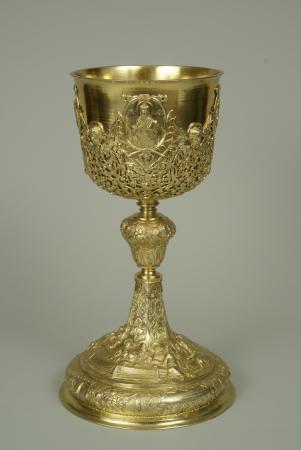 Silver Gilded Chalice (1755)
(in commemoration of the 970th anniversary of the 1st Chronicle about Kyiv-Pechersk Lavra)
Dear friends!
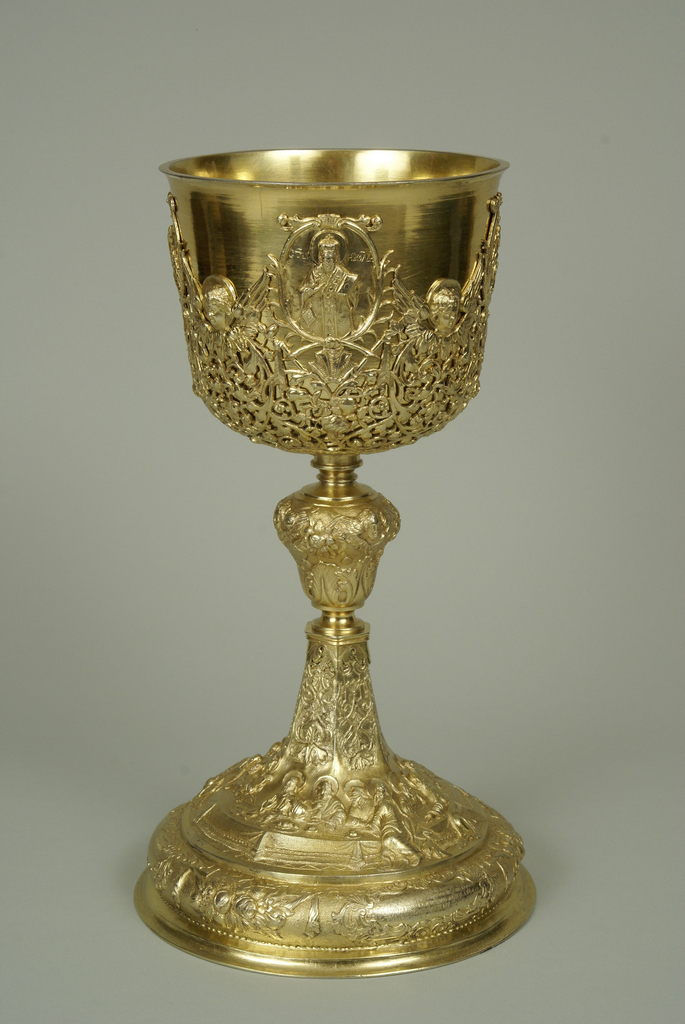
We continue introducing the items of the Fund collection of the National Preserve “Kyiv-Pechersk Lavra”. Today we would like to speak about silver gilded chalice of 1755 (KPL-M-9518). It was contributed to the Trinity-Hospital Monastery of Kyiv-Pechersk Lavra by book-keeper Ivestion.
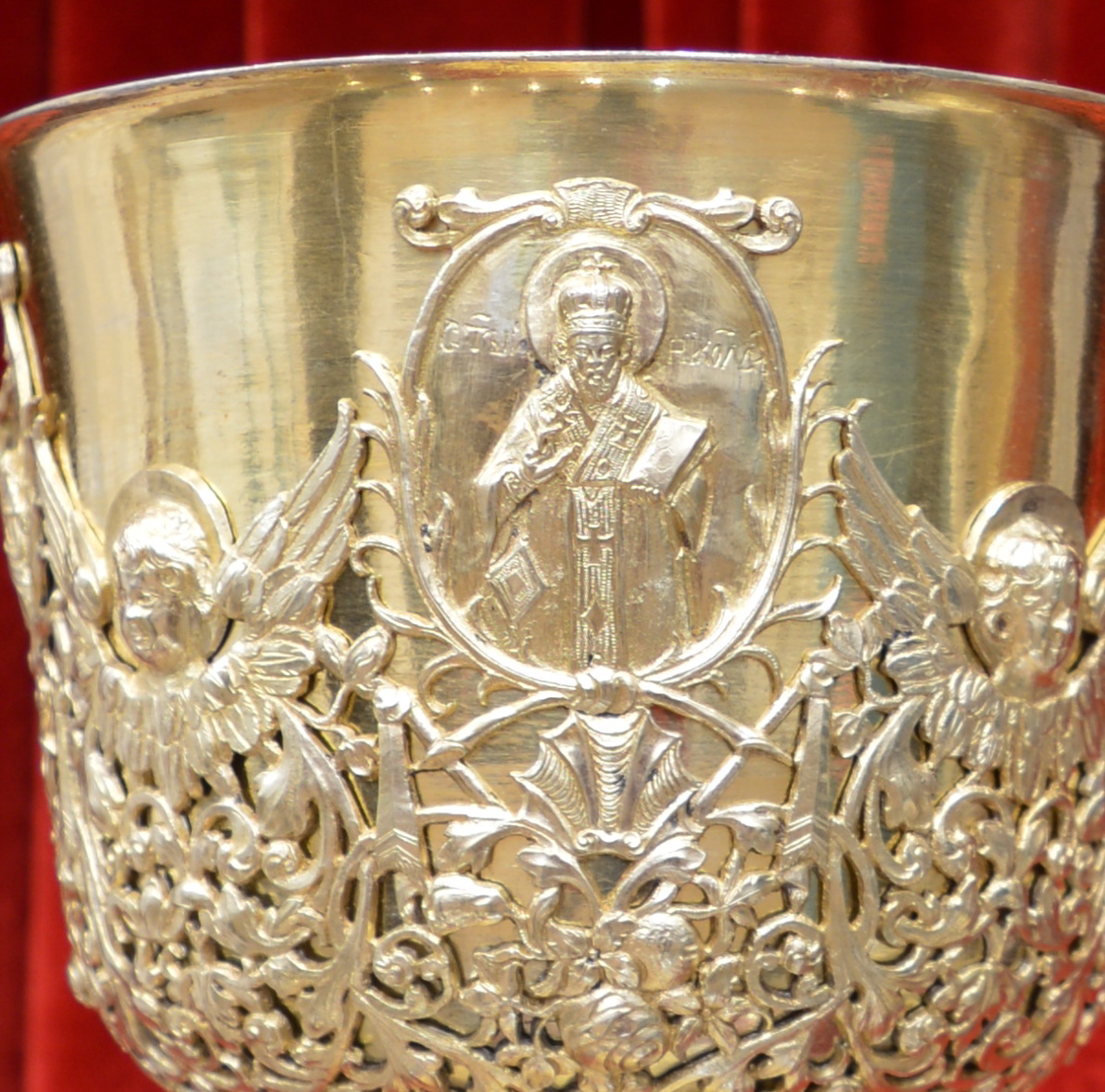
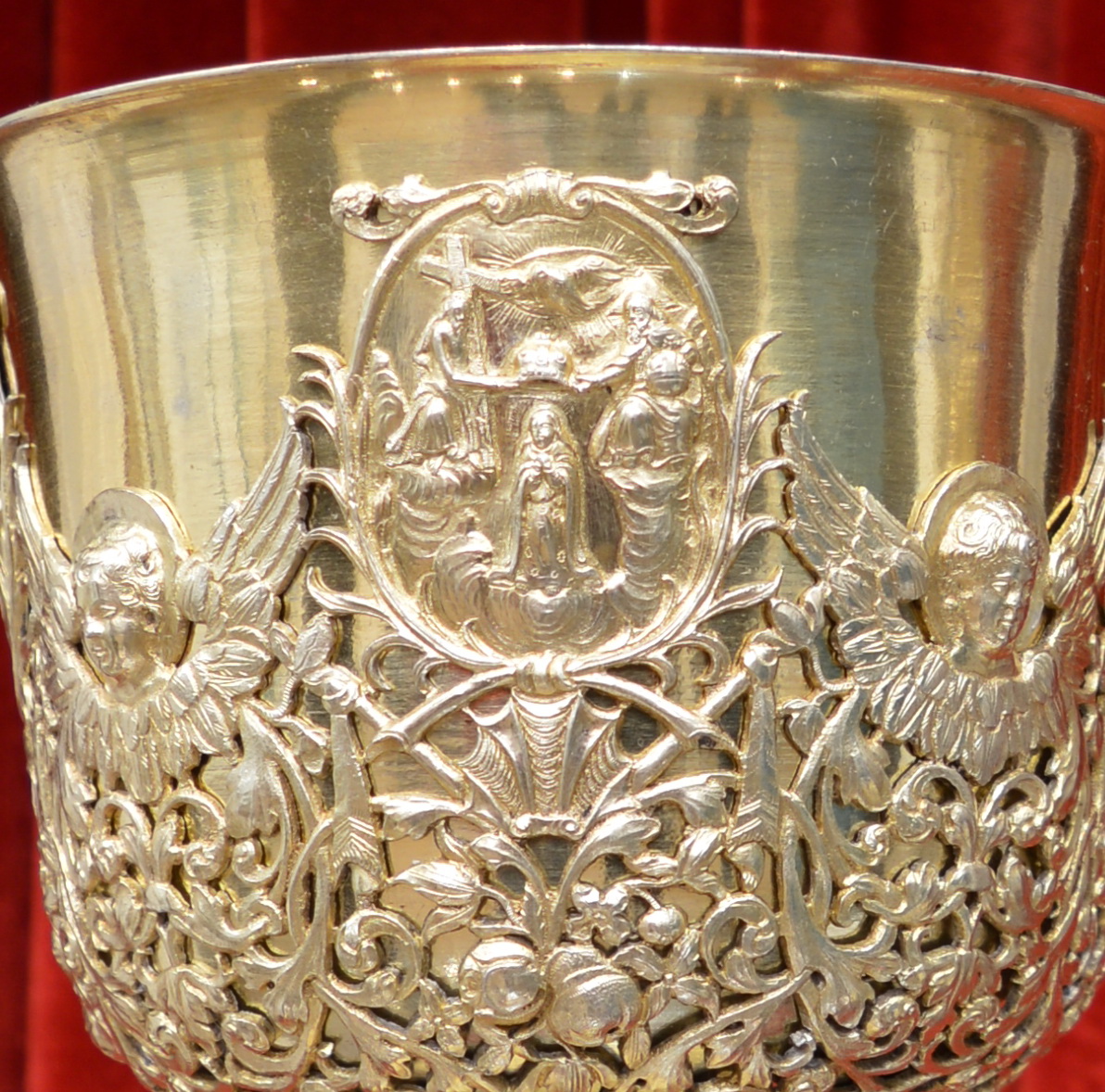
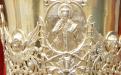
The iconography of the silver gilded chalice has certain features. Two compositions - “The Crucifix with Bystanders” and “Resurrection”, located in its medallions, are traditional for the iconography of Orthodox chalices. The third one – “The Coronation of the Virgin”, is a rather rare plot to be depicted on such type of religious ware.As of today, this is the only known chalice in the Fund collection of the Preserve with such composition on the bowl. The fourth medallion depicts the figure of St. Nicholas the Wonderworker, one of the most revered saints in Ukraine. It is that particular southern side of a bowl, where one could earlier observe the cross of Calvary.
The only image on the chalice’s pallet, which occupies its entire surface, is a multi-figured composition known as “The Last Supper”. Liturgical and historical type of the composition involves the most accurate reflection of Gospel texts.
Usually this plot depicts eleven or twelve apostles sitting at the table. On our pallet there are fourteen apostles. Their faces express different emotionsSomeone is outraged, someone is surprised, someone is in despair. Even St. John is involved in the general emotional “conversation”. In contrast to the words of his own Gospel, St. John should have laid his head on the chest of Jesus Christ (John 13:23). Judas is depicted in the foreground of the composition and he is separated from other apostles by the table. Contrary to the Gospel of Mark (Mark 14:20) and Matthew (Matt. 26:23), one can see Judas at a considerable distance from the Christ at this composition. He holds a three-dimensional bucket bag in his hand, which is behind his back. The halo around his head is absent.
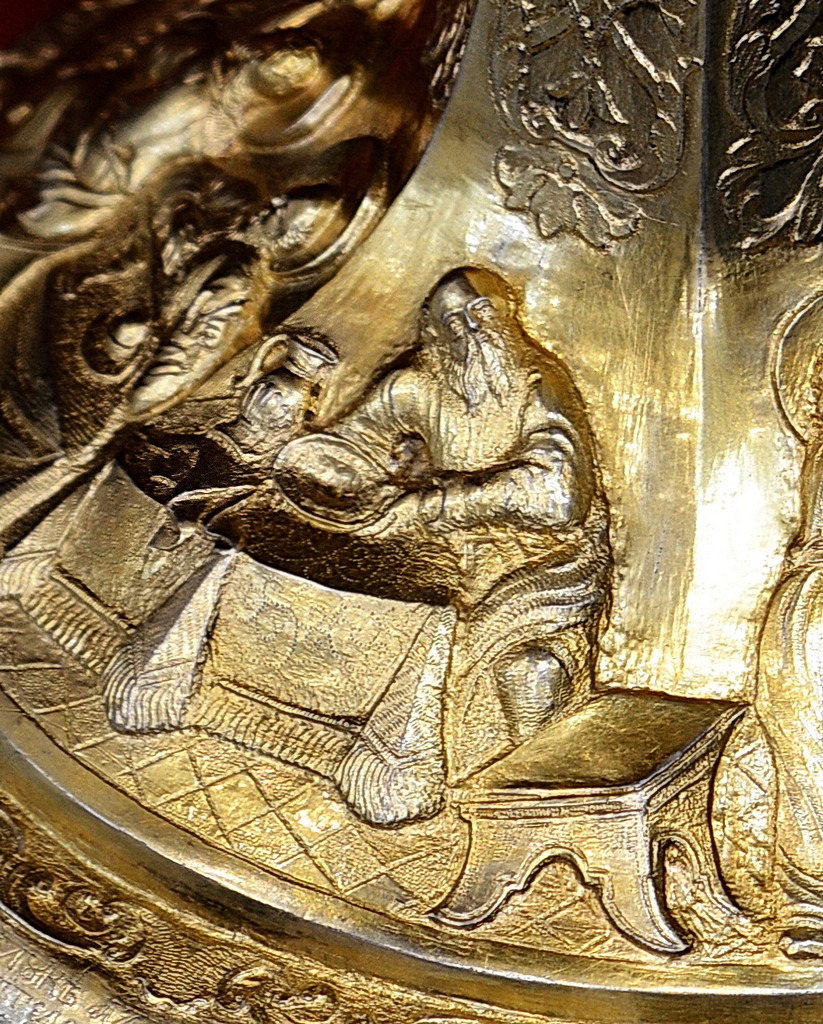
The halo is also missing in the fourteenth character of the composition. An elderly man of strong physical complexion, with high forehead and a thick beard forked at the end, sits at a separate table thinking about something. In front of him there is a large dish. A little to the side one can see a jug. On the edge of the table there is a cloth. This character is the only one who does not take part in the general conversation - the bench with curly legs, standing next to his table, is empty. This is probably the owner of the house where the Last Supper took place. The jug depicted on the table adds to this assumption. “Look, when you are on your way to the city, you will meet a man, carrying jug with water in it. Follow him to the house, which he is supposed to enter… he will show you a big cenacle: cook [Easter cake] there” (Luke 22:10, 12).
The unusual approach to the composition “The Last Supper”, the vital emotional interpretation of the characters point at the innovative art school, which is focused on the Western art. The way the composition was created gives the ground to assume that its sketch was done by the Lavra’s artist, and the composition itself appeared at the request of Zosima Valkevych, the customer, Cathedral elder and caretaker of the Near Caves. The fact that Valkevych was a zealous supporter of Lavra’s icon-painting workshop can be proven by the that time archival documents.
Prepared by Olena Serhii, senior research associate
Research Division of Artistic Heritage of the National Preserve “Kyiv-Pechersk Lavra”
Captions to the illustrations:
1. Chalice. Kyiv. 1755. Silver, minting, engraving, gilding. 31.3 × 17.5 × 16.0 cm [KPL-M-9518]
2. Composition “St. Nicholas”. Chalice. Kyiv. 1755. Fragment of a bowl. KPL-M-9518
3. Composition “Coronation of the Virgin”. Chalice. Kyiv. 1755. Fragment of a bowl. [KPL-M-9518]
4. Composition “The Last Supper”. Detail: the fourteenth character. Chalice. Kyiv. 1755. The fragment of the pallet’s composition [KPL-M-9518].