Notes on the history of Lavra architecture
Why is the Southern Tower of the Kyiv-Pechersk Lavra called the “Clock Tower”?
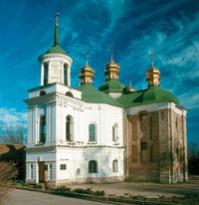
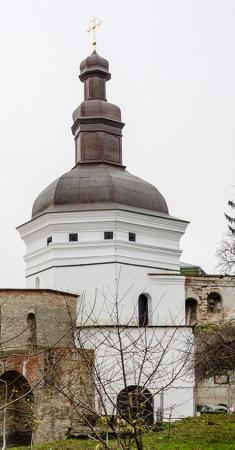
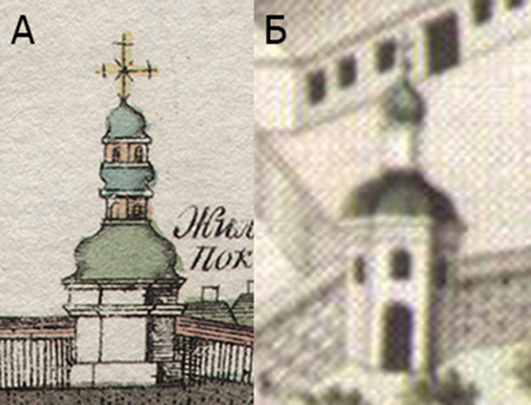
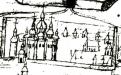
It is believed that the fortress tower in the southern part of the Upper Lavra defensive walls was built at the turn of the 17th and 18th centuries (Fig. 1). However, the detailed evidence of it had not been found out until the middle of the 18th century. We know its images dated 1780 and 1783 (Fig. 2). A relatively small building for monitoring and conducting fire on the first tier had eight loopholes on eight faces respectively. The entrance was on the north side. In the second half of the 18th century, due to the construction of the Pechersk Citadel, the tower lost its fortification significance and gradually became an outbuilding.
In 1760 Pavlo, a resident of the Pechersk town installed a clock on the reconstructed tower. Some monastic documents inform that the master was called Dzygarmistr (from the Polish “zegarmistrz” – watchmaker), other notice that he came from Cherniavsky family of the Lavra subjects. He designed the first clockwork for the 3-rd tier of the Great Lavra bell tower. The archival documents testify that in 1771 an epidemic of plague took the master’s life.
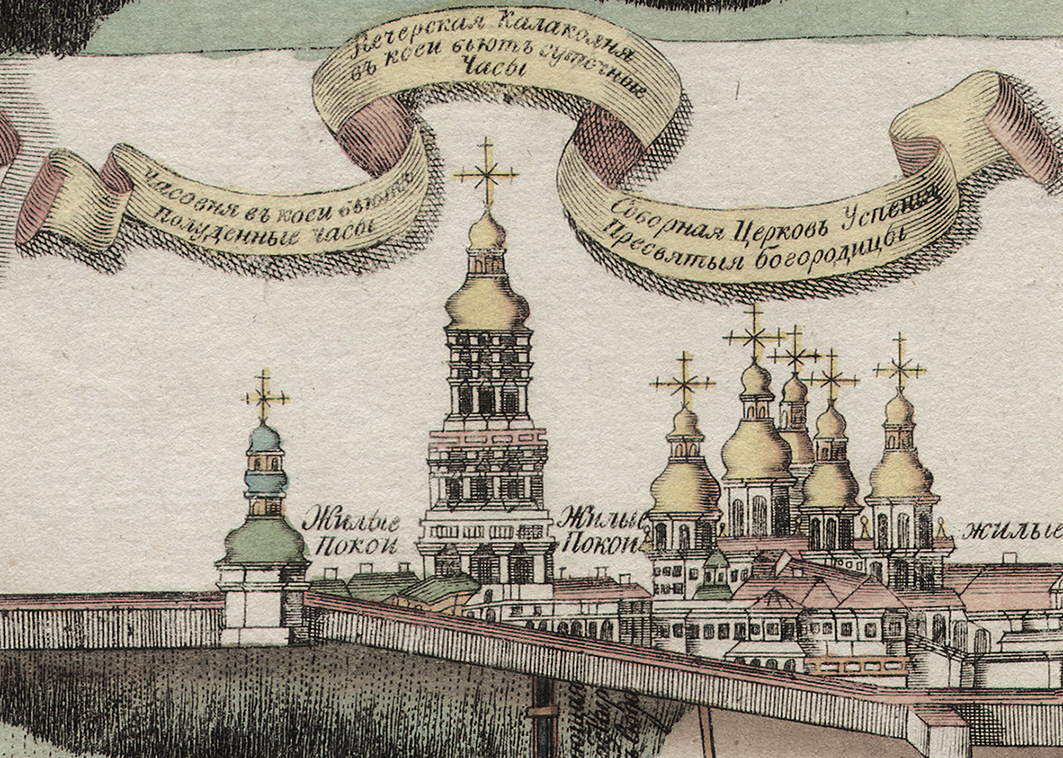
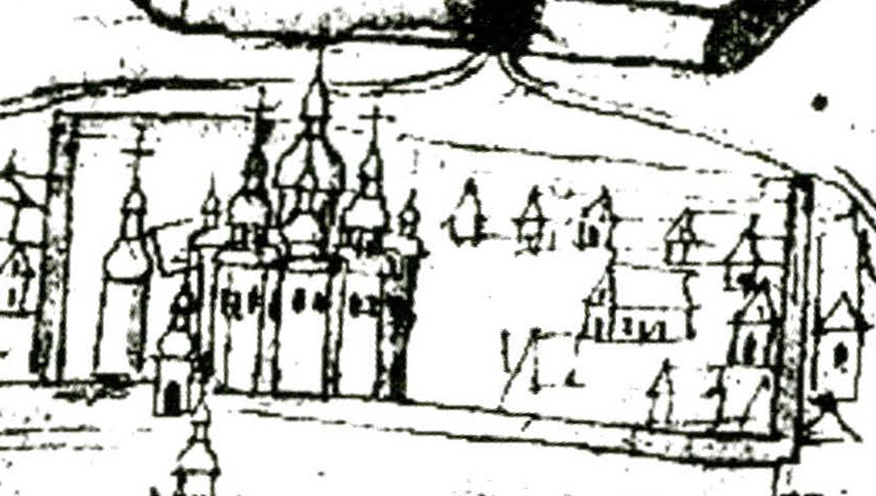
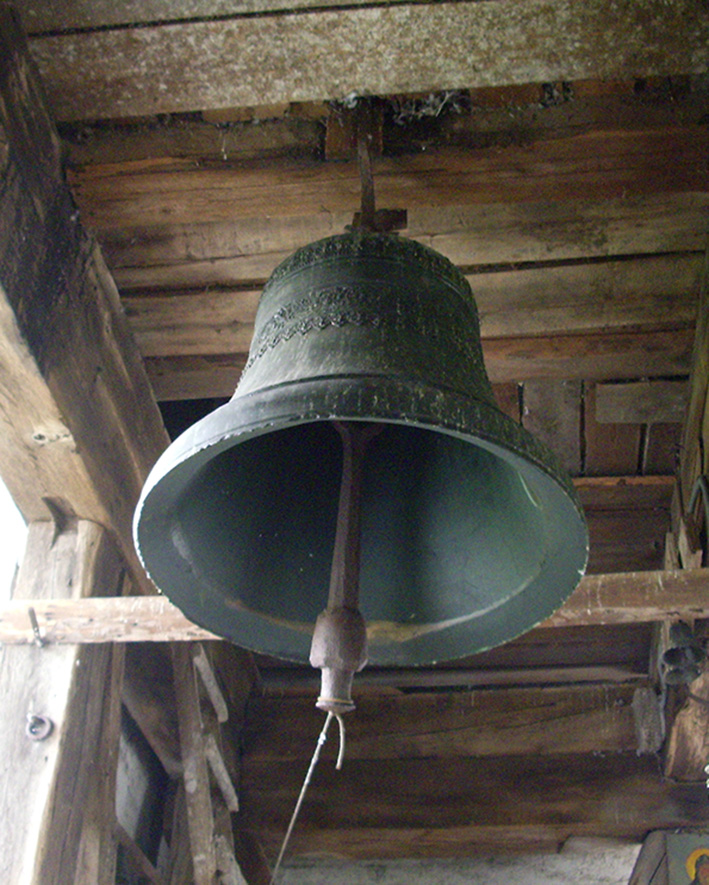
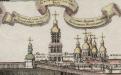
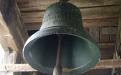
Thus, the tower began to be called “Clock” not earlier than in 1760. On the plan of 1780, it was signed as “Chapel, in which the noon clock strikes” (next to the Great Bell Tower, “in which the diurnal clock strikes”) (Fig. 3). In 1816, the “clock bell” was moved from the Southern Tower to the Great Lavra bell tower. It is so-called “Mazepa’s” bell, which is the oldest surviving bell in Kyiv. In 1683, Hetman Ivan Mazepa presented it to the Ascension Convent, located opposite the Lavra (Figs. 4, 5). The history of the tragic destruction of this monastery goes beyond this topic. It should be noted the year marked on the bell is the year of the first documentary mention of the hetman’s mother as the Abbess of the Ascension monastery – the nun Mary Magdalene. After the fire of 1718, the bells of the nunnery were moved to the Lavra, however not all of them. The land and buildings of the Ascension Monastery were then already alienated by the order of Peter I in favor of the Military Department. However, the Ascension Church functioned from 1711 as a parish garrison one (dismantled in the late 18th century), and the rest of the monastery buildings stood for a long time while the Arsenal was being built. Therefore, the exact date of the Mazepa’s bell removal and its transfer to the South Tower is currently unknown. Supposedly, this happened in 1760.
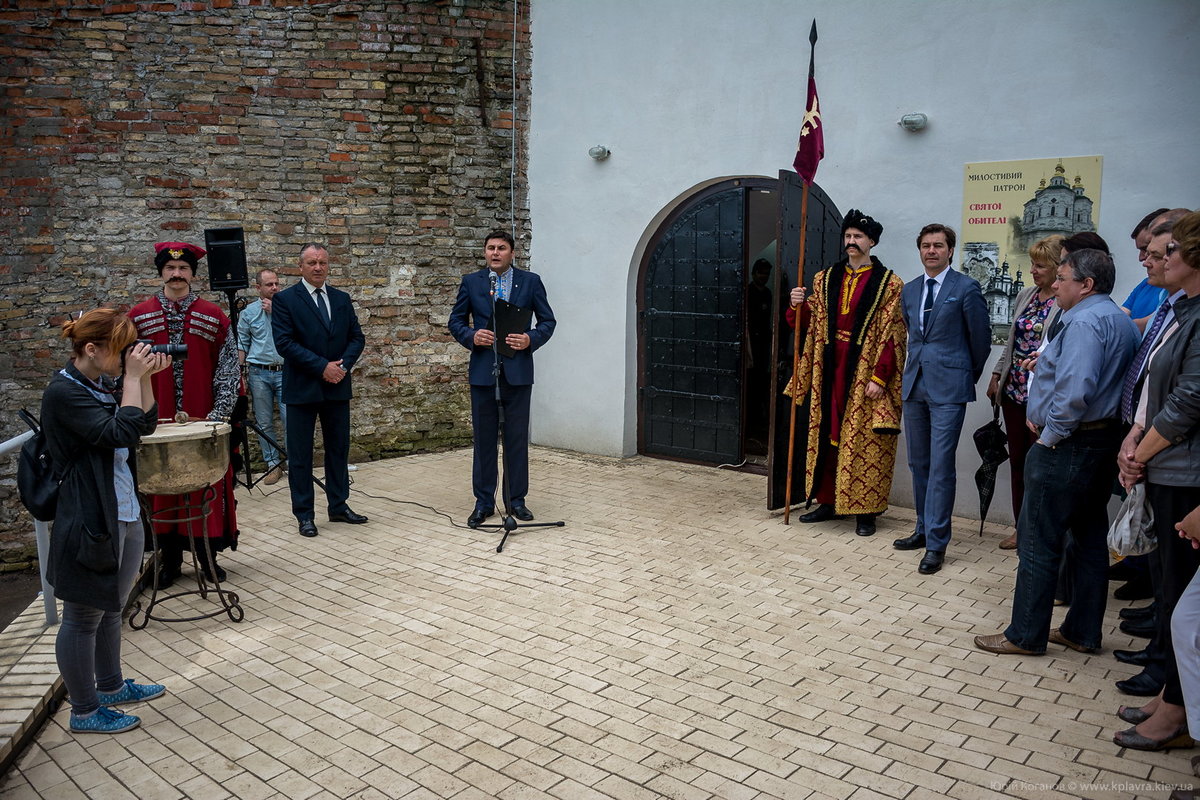
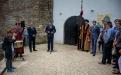
Thus, not coincidentally in May 2018 one of the first exhibitions in honor of Hetman Ivan Mazepa was built in the Southern Tower on the territory of the National Preserve “Kyiv-Pechersk Lavra” (Fig. 6).
Olha Krainia, Kostiantyn Krainii
Captions to illustrations:
1. The Southern (Clock) Tower of the Kyiv-Pechersk Lavra. Modern look
2. The Southern Tower: A – view from the south on the plan of 1780, B – view from the east on the plan of 1783
3. Fragment of the Kyiv-Pechersk Monastery plan of 1780 showing the Southern Tower, the Great Lavra Bell Tower and the Assumption Cathedral
4. A fragment of the Kyiv’s plan of 1713–1715 depicting the Ascension Monastery buildings
5. “Mazepa’s bell” at the bell tower of the Nearby Caves. Modern photo
6. Opening of the “Merciful Patron of the Holy Monastery – Hetman Ivan Mazepa” exhibition in the Southern (Clock) Tower. May 18, 2018


/socialmedia/icons/levelten/glossy/32x32/youtube.png)
/socialmedia/icons/levelten/glossy/32x32/facebook.png)
/socialmedia/icons/levelten/glossy/32x32/twitter.png)