Artistic Heritage of Kyiv-Pechersk Lavra
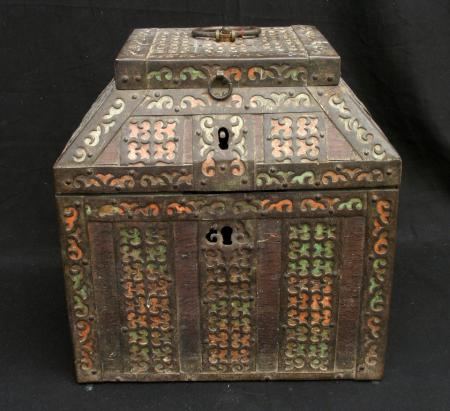 Ancient box-“teremok”
(in commemoration of the 95th anniversary
of National Preserve “Kyiv-Pechersk Lavra”)
Dear friends!
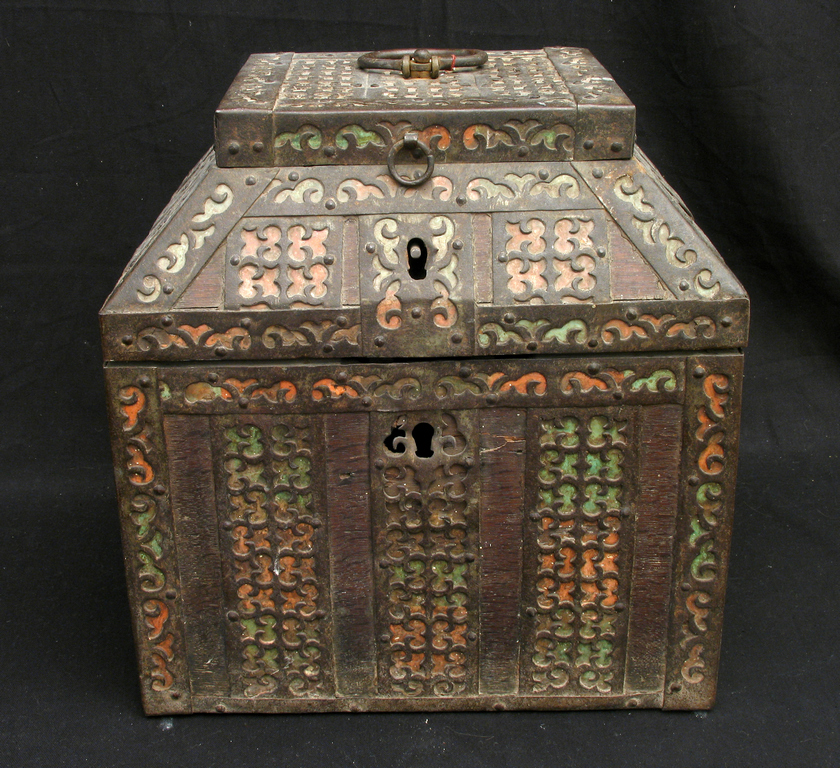
We continue to acquaint you with Artistic Heritage of Kyiv-Pechersk Lavra. Today we are going to talk about an ancient box-“teremok” from the Fund collection of the National Preserve “Kyiv-Pechersk Lavra” (KPL-M-10518).
The word “sunduk” (chest or trunk) has a Turkic origin (from “sandyk”, meaning “box”). The forms of boxes and their types (depending on the purpose of their usage) were created over the centuries. As a result, a box became a universal item of furniture. It was used as a bed, a place to sit, a closet, a chest of drawers, a container for books, pharmacies, paints, etc. Besides, it was a kind of safe for valuables.
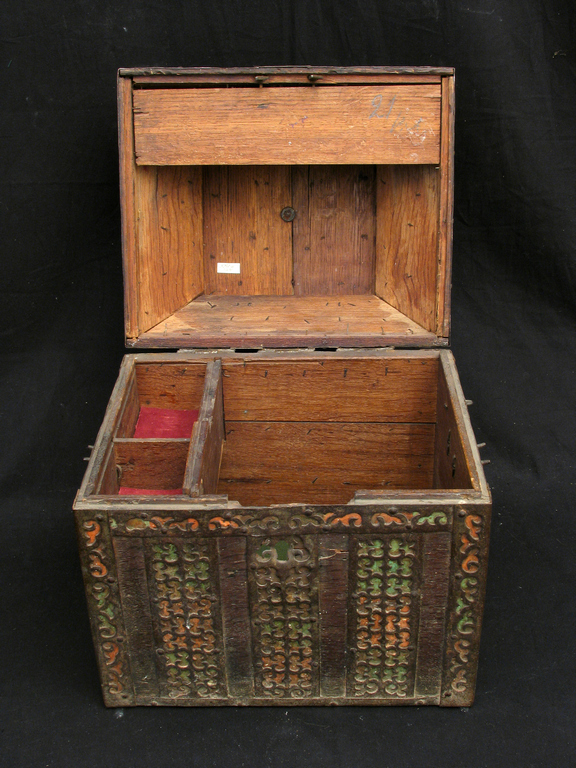
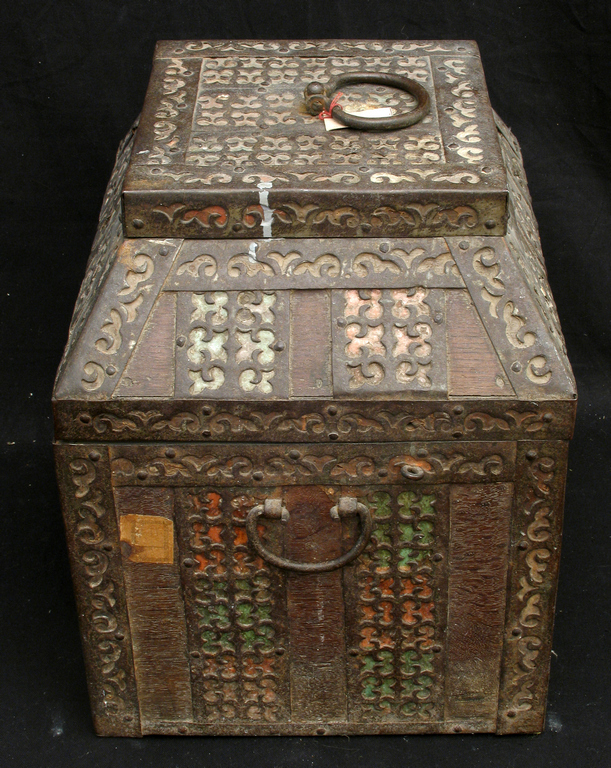
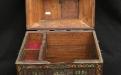
People often used a so called box-“teremok”. They stored documents, personal papers or family valuables there. It started being called “teremok” for the specific shape of the box‘s roof, which was similar to the vertical extension, built over a wealthy house - terem. The box-teremok has two compartments: the upper one (located under its cover) and the lower one, which is the main box. In it, there is an additional compartment fixed on the left side and used for small things. The box was usually made of oak boards but sometimes masters used other more soft wood species, such as linden, spruce or pine. Carpenters were responsible for boards, locksmiths – for box assembling. The box can be considered a prototype of modern cabinet furniture. Its outside surface was reinforced with iron, which was also used for box decoration. The cover was attached to the main “body’ of the box by iron hinges. These two parts were linked by the locks.
The production of boxes was mainly concentrated in the cities. Box masters usually signed their products but it was not compulsory. Boxes made in different centers had their specific peculiarities. They could differ in materials, typical finishing techniques, stylistic and artistic types of decoration.
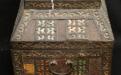
The box-teremok from the Fund collection of the Preserve was made in Velykyi Ustyuh - one of the centers of boxes’ production. This town has become known for this type of wood craft since the 17th century. But already in the 18th century it could be compared with Novhorod, Kholmogory and Moscow - leading box manufacturing centers. From the last quarter of the 17th century craftsmen of Velykyi Ustyuh started making iron-sided boxes decorated with a specific hole-patterned ornament. “Box-teremok” types of furniture were also made on a by-order basis to be donated then. Ancient forms of Ustyuh boxes decorated with simple holed ornamental motives stayed put until the middle of the 19th century. However, the demand for more sophisticated things started being clearly felt in the 18th century already. That is why, the boxes got lighter, smaller in their sizes and holed patterns.
One feature that makes Ustyuh boxes specific is colored paper, fabric or mica. These materials were used as the background for the metal openwork upholstery. Smooth, solid metal surfaces were attached to the box with nails that had clearly seen convex caps.
The box-teremok from the Fund collection of the Preserve dates back to the end of the 17th century. It was found on the ruins of the Dormition Cathedral during archeological excavations in 1948.
Captions to the illustrations:
1. Box-teremok. The end of the 17th century. Velykyi Ustyuh. Wood, metal, mica. 39.0 × 34.0x28.0 cm. KPL-M-10518
2. Box-teremok. The end of the 17th century. Velykyi Ustyuh. Wood, metal, mica. 39.0 × 34.0 × 28.0 cm. KPL-M-10518
3. Box-teremok. The end of the 17th century. Velykyi Ustyuh. Wood, metal, mica. 39.0 × 34.0 × 28.0 cm. KPL-M-10518
Prepared by Olena Serhii
Senior research associate
Research Division of the Artistic Heritage of the National Preserve “Kyiv-Pechersk Lavra”