“Memories of Kyiv-Pechersk Lavra” photo project
Architectural and archaeological research of Kyiv-Pechersk Lavra (1997-2000)
Today we complete our story about architectural and archaeological research conducted in the territory of Kyiv-Pechersk Lavra in 1997-2000. It preceded and accompanied the reconstruction of the Great Pechersk Church.
Each of the four previous releases was devoted to a certain period of the research works or told the readers about a particular set of discovered treasures (see: link-1, link-2, link-3, link-4).
Thus, today, we can assume that we have fulfilled our task and shared our “photo knowledge” with you. You will now have the idea about the main stages of Lavra’s archaeological activities carried out in the late 20th century as well as the most important findings discovered at that period of time.
However, our editorial portfolio is still full of pictures that were not included in the previous “archeological” releases. Most of them simply did not fit any of the previously discussed topics. Instead, they most likely characterize the general course of the research conducted throughout the whole period. Those photos fixed not only archaeologists, but other employees of the Preserve as well as the representative of Kyiv-Pechersk monastery, who supervised the restoration of the Dormition Cathedral on behalf of Father Superior.
Next release of ”Memories of Kyiv-Pechersk Lavra” photo project will acquaint you with architects, restorers and builders who were involved into the restoration of the Dormition Cathedral during 1998-2000. The first release of this series is going to be about the restoration works in autumn 1998, when Dormition Cathedral started rising from the ruins.
Captions to the illustrations:
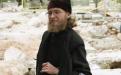
1. Protective hard hat - necessary attribute at the construction site and place of archaeological research. Hieromonk (now Archimandrite) Joseph (Levchenko), a resident of Kyiv-Pechersk Lavra
2. The first who started working were achaeologists. Oleksandr Syromyatnikov sets up a tent over the place of future excavations
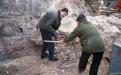
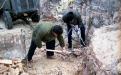
3-4. Scoops, knives and brushes are not the only tools that archaeologists need to work in the excavation site. Sometimes they used a hammer drill. Andriy Zankin and Oleksandr Rezuto
5. The works continued under the watchful eye of Father Joseph
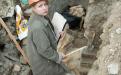
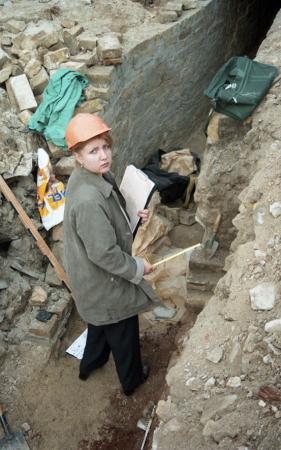
6. Inspection of the remains of the heating channels. Oksana Chobitko (Ryzhenko)
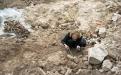
7-8. Participants of the excavation works witness that Cathedral stood “on the bones”. Hieromonk Joseph helps to collect bone remains
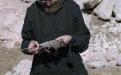
9. Some interesting archaeological findings: Fr. Joseph examines a piece of cloth
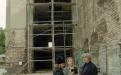
10-11. Employees of the Fund and Restoration Divisions of the Preserve look at the findings: Fr. Josepf, Oksana Chobitko and Halyna Marchenko, Head of the Preserve’s Fund Division (il. 10); Halyna Marchenko, Fr. Joseph and Oleksandr Zagrebelny, Restoration and Expertise Center employee (il. 11)
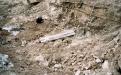
12. Place of archaeological research